7 Reasons On-Demand Conference Badge Printing Is Replacing Pre-Printed Badges at US Events
Event registration has always been one of the more friction-prone parts of running a professional conference. Attendees arrive in waves, names get misspelled during registration, last-minute additions pile up, and somewhere in the middle of it all, a stack of pre-printed badges goes partially to waste. For years, event organizers accepted these inefficiencies as the cost of doing business. That acceptance is changing.
Across the United States, conference organizers at trade shows, corporate summits, academic conferences, and industry expos are reconsidering how badges get produced. The shift isn’t driven by novelty. It’s driven by operational reality — the need to reduce waste, cut pre-event labor, and give check-in staff the tools to handle real-time changes without friction. What’s emerging is a more practical approach to one of the most routine but consequential parts of any event.
The Operational Case for Printing Badges at the Event
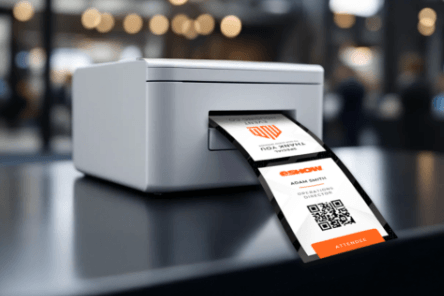
On demand conference badge printing refers to the process of producing attendee badges at the point of check-in, typically triggered by a registration scan or data lookup, rather than preparing them in advance. This model has been available in various forms for years, but the reliability of the hardware and the integration of registration platforms have matured significantly, making it a genuinely viable alternative to traditional pre-print workflows. For event planners managing hundreds or thousands of attendees, on demand conference badge printing addresses several of the most persistent pain points in pre-event preparation.
Pre-printed badges require organizers to finalize their attendee list well before the event opens. In practice, registrations continue arriving until the day of the event, walk-ins appear despite closed registration windows, and name corrections get submitted hours before doors open. The pre-print model doesn’t accommodate any of this gracefully. The on-demand model, by design, does.
Reason 1: Attendee Data Rarely Freezes Before the Event
Registration lists are living documents. Attendees update their job titles, correct name spellings, change company affiliations, or cancel and re-register under different credentials — often within the final days before an event. When badges are printed weeks in advance, none of these changes can be reflected without reprinting, which adds cost and labor.
How Late Changes Affect Pre-Print Workflows
The standard pre-print process involves exporting a registration list, sending it to a print vendor, receiving finished badges, and sorting them alphabetically or by session track. When a change comes in after that export, the options are limited: hand-write a correction, print a single replacement on a different printer that may not match the batch, or simply absorb the error and hand the attendee an inaccurate badge. None of these outcomes reflect well on the event’s professionalism. On-demand systems pull from the live registration database, so whatever is in the system at the moment of check-in is what gets printed.
Reason 2: Walk-In Attendees Are a Consistent Reality
Very few events close registration and then receive exactly that number of attendees — no more, no fewer. Walk-ins are a feature of professional conferences, not an exception. Industry events, in particular, attract colleagues who hear about the conference late, receive a last-minute invitation, or simply decide the day before that attendance is worthwhile.
The Cost of Being Unprepared for Walk-Ins
When an event is fully committed to pre-printed badges, accommodating walk-ins requires a separate workflow — typically a hand-labeled badge or a blank badge with a written name. This creates a two-tier attendee experience that is immediately visible to everyone in the room. On-demand printing eliminates the distinction. Walk-ins are registered at the desk and their badge is produced in the same format as every other attendee’s, maintaining a consistent experience regardless of when someone decided to come.
Reason 3: Pre-Print Waste Adds Up Across Events
No-show rates at professional conferences are well-documented. Across many event types, a meaningful percentage of registered attendees simply don’t appear. When every registered name has already been printed on a badge, every no-show represents a badge that was produced, transported, sorted, and ultimately discarded. This is a real cost — in materials, in labor, and in environmental terms.
Rethinking What “Prepared” Means
The traditional view of event readiness includes having every badge pre-printed and sorted in labeled envelopes or hanging in alphabetical order. This approach feels thorough, but it bakes in a fixed failure rate. On-demand printing redefines readiness as having the equipment, consumables, and data in place to produce any badge needed, rather than producing all possible badges in advance. The result is that materials are only consumed for attendees who actually check in, which reduces both waste and unnecessary expenditure.
Reason 4: Check-In Speed Is Determined by Workflow, Not Badge Type
A common concern about on-demand badge printing is that it will slow down check-in. This concern is understandable but generally doesn’t hold when the system is properly set up. Check-in speed depends on how efficiently attendee data is accessed and how quickly the printing hardware operates — not on whether the badge was produced that morning or three weeks earlier.
Where Bottlenecks Actually Occur
In pre-print setups, check-in bottlenecks often occur at the badge retrieval stage — staff searching through alphabetical stacks for an attendee whose name is hyphenated, who registered under a nickname, or whose badge ended up in the wrong pile. In on-demand setups, the same bottleneck risk shifts to the data lookup, but well-integrated systems with barcode or QR scan capabilities can bring check-in times well within acceptable ranges. The printer becomes part of the workflow rather than a potential delay.
See also: The Vibrant Future of Desktop Manufacturing: Tech Trends Defining 2026
Reason 5: Badge Customization Is More Practical in Real Time
Many conferences now produce differentiated badges — by session access level, attendee type, company size, sponsorship tier, or speaker status. Managing these distinctions in a pre-print environment means producing multiple badge variants in advance and ensuring each attendee receives the correct one during check-in. This introduces sorting complexity and creates opportunities for error.
Dynamic Fields Without Manual Sorting
On-demand systems tied to registration data can automatically pull the appropriate badge template for each attendee based on their registration category. A speaker and a general attendee walk up to the same check-in desk, and the system routes each to the correct badge design without staff needing to remember or verify the distinction manually. This matters most at large events where staff turnover during a long check-in window means that institutional knowledge about badge types is not evenly distributed across everyone working the desk.
Reason 6: The Logistics of Pre-Printed Badges Are Underestimated
Printing badges in advance means transporting them to the venue. For regional events, this is manageable. For national conferences where event staff are flying in, the logistics become more complicated. Badges need to be packaged securely, checked as luggage or shipped ahead, and accounted for upon arrival. Damage during transit — creasing, moisture, or ink smearing — can affect a portion of the batch without easy resolution once on-site.
What On-Site Printing Changes About Pre-Event Preparation
When badges are printed at the venue, the physical transport risk disappears. Event teams carry or ship the hardware and consumables, which are compact and durable compared to a batch of finished badges. If a printer requires attention on arrival, there is time to address it before check-in begins. If a batch of pre-printed badges arrives damaged, the options are far more constrained. The event industry, like most service industries, is better served by systems that can adapt to problems than by systems that assume nothing will go wrong.
Reason 7: Attendee Experience Reflects Operational Choices
The quality of check-in sets the tone for an event. It is the first operational touchpoint an attendee has with the conference infrastructure, and it shapes their initial impression of how well the event is organized. A smooth check-in — accurate badge, correct name, appropriate access designation — signals competence before the first session begins.
The Connection Between Back-End Systems and Front-End Experience
Attendees rarely know or care whether their badge was printed three weeks ago or thirty seconds ago. What they notice is whether it’s correct, whether it looks professional, and whether the check-in process moved efficiently. On-demand printing, when implemented with appropriate hardware and integrated registration data, supports all three. According to research on event logistics and attendee experience published through professional event management organizations such as PCMA, check-in quality consistently ranks among the top factors influencing overall event satisfaction — making it an area where operational investment has a measurable return.
Closing: Why This Shift Is Happening Now
The move away from pre-printed badges is not about adopting new technology for its own sake. It reflects a broader recalibration in how event organizers think about risk, waste, and operational flexibility. Pre-printed badge workflows were designed for a time when registration lists were more stable, events were less dynamic, and the cost of over-printing was considered a normal overhead. Those assumptions have shifted.
Today’s events involve continuous registration changes, diverse attendee categories, and tight operational margins that make waste harder to justify. On demand conference badge printing addresses these pressures in a concrete, practical way — not by eliminating the complexity of event logistics, but by moving the production step to the moment when the information is most accurate and the output is most certain to be used.
For event planners evaluating their check-in infrastructure, the relevant question is no longer whether on-demand printing is a viable option. The question is whether the existing pre-print workflow is still the right fit for the scale, pace, and variability of the events they manage. For a growing number of organizers across the United States, the answer is that it no longer is.