The Vibrant Future of Desktop Manufacturing: Tech Trends Defining 2026
If you look back at the desktop fabrication industry a decade ago, the output was incredibly predictable. Machines produced rigid, single-color plastic objects—usually a brittle gray or a garish, translucent green. If an engineer or a designer wanted a prototype to actually look like a finished consumer product, the printing process was only step one. Step two involved hours of sanding, masking, priming, and painstakingly applying paint.
As we move through 2026, that tedious, labor-intensive workflow is officially obsolete. The focus of the manufacturing hardware sector has pivoted aggressively. While speed and reliability remain important, the true battleground is now aesthetics. The ability to print complex, vibrant, market-ready objects in a single click is no longer a luxury for million-dollar industrial labs; it is sitting on the desks of small business owners.
Here is a deep dive into the technological trends transforming how we produce physical goods, with a heavy focus on the explosion of multicolor and full-color 3D printing.
The Death of the “Gray Prototype”
For years, hardware startups had a distinct disadvantage compared to software companies. Presenting a clunky, monochromatic plastic prototype to an investor or a focus group requires a lot of imagination on their part. They have to pretend it looks like a sleek, finished device.
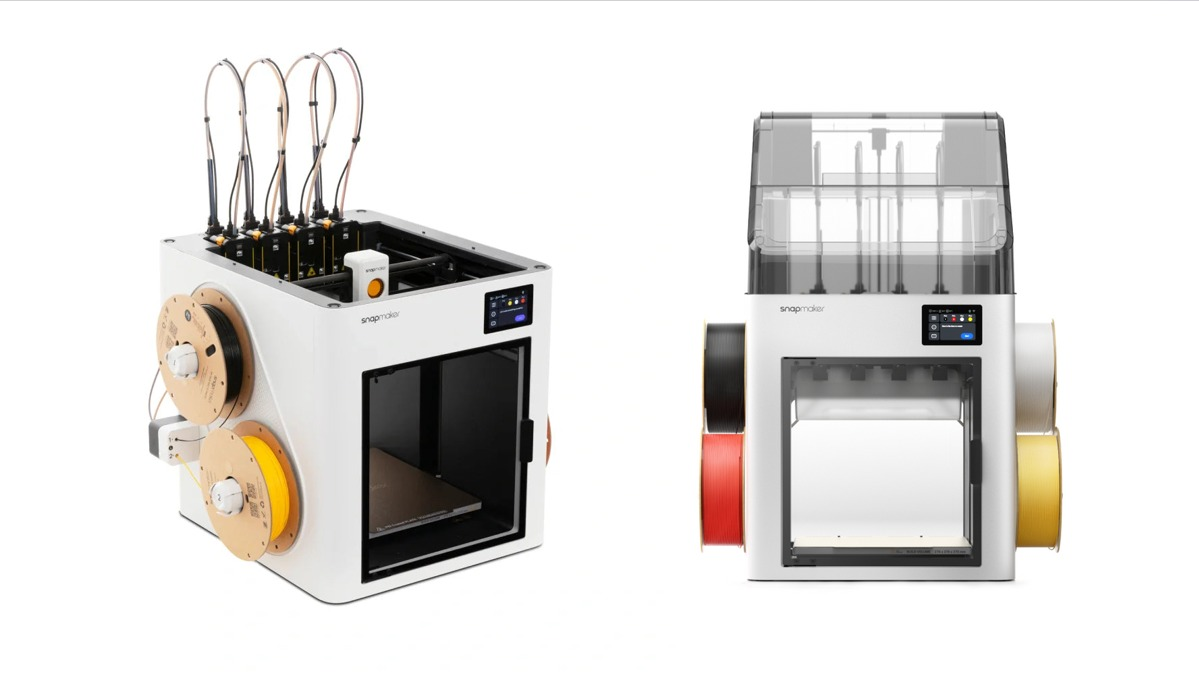
The widespread adoption of the modern color 3d printer has completely eliminated that friction. Rather than relying on a single nozzle feeding a single spool of plastic, today’s desktop machines utilize sophisticated tool-changing heads or intelligent material-mixing extruders. They can juggle four, eight, or even sixteen different materials simultaneously.
This means a designer can print a gaming controller with a rigid black chassis, flexible red rubber grips, and white translucent buttons—all in one uninterrupted job. The object that comes off the build plate isn’t just a physical representation of an idea; it is a fully functional, visually accurate product. By removing the painting and assembly phases, companies are cutting their prototyping timelines from weeks down to a matter of hours.
Beyond Swapping: The Rise of Full-Color 3D Printing
While swapping individual colored filaments (multicolor printing) is fantastic for consumer goods and hard-edged designs, 2026 is seeing an even more impressive leap: true full-color 3D printing at the desktop level.
Think of how your traditional 2D paper inkjet printer works. It doesn’t have a thousand different ink cartridges; it mixes Cyan, Magenta, Yellow, and Key (Black)—CMYK—to create millions of distinct shades. Desktop 3D printing is finally mastering this exact same concept in three dimensions.
Instead of just switching between solid colored spools of plastic, modern full-color systems actively dye a highly absorbent base material as it is being printed. Tiny inkjet heads spray CMYK droplets directly onto the plastic layer by layer. The result is photorealistic. You are no longer limited to solid blocks of color. You can print complex gradients, intricate textures like woodgrain or marble, and even high-resolution photographs wrapped around complex spherical geometry.
Who Actually Benefits? Real-World Applications
This shift toward full-color and multicolor manufacturing is not just a gimmick for hobbyists making toys. It is driving massive, tangible changes across highly technical industries.
Surgical Planning and Medicine: Surgeons are moving away from studying flat, 2D MRI scans. Today, hospitals can feed patient data directly into a3d printer to produce a physical, 1:1 scale model of a human heart or brain. By utilizing full-color technology, the printer can distinctively color-code different biological structures. Tumors can be printed in bright red, bone in white, and vital blood vessels in blue. Surgeons can physically hold and practice a complex procedure on a color-accurate replica before the patient ever enters the operating room.
Architecture and Real Estate: Architects no longer have to spend weeks hand-gluing balsa wood to build scale models. With full-color printing, a firm can output a miniature cityscape where the buildings feature actual brick textures, the roofs are shingled, and the surrounding topography is printed in varying shades of green and brown. It provides clients with a drastically more immersive understanding of a space.
Education and Scientific Modeling: Classrooms are replacing expensive, outdated plastic anatomy models or molecular kits with highly specific, printed-on-demand alternatives. Teachers can print complex chemical bonds or topographical maps of the ocean floor, using color to explicitly denote different elements or elevation drops, making complex data tactile and visually intuitive.
See also: Maximizing Business Success Through Digital Marketing
Solving the Waste Problem
As the industry chased color, it initially ran into a massive environmental and economic hurdle: the purge tower. In older machines, to switch from black plastic to white plastic, the printer had to spit out a large “transition” block of wasted material to clear the nozzle. For a highly detailed multicolor print, you would often end up with more plastic in the trash bin than in the final product.
The tech trends of 2026 have directly targeted this inefficiency. Modern slicer software algorithms now utilize “purge-to-infill” technology. Instead of throwing that transition plastic away, the machine smartly hides the mixed, ugly colors inside the invisible, hollow interior structures of the model itself. Furthermore, hardware advancements like independent dual extruders (IDEX) mean machines have multiple dedicated nozzles, eliminating the need to flush lines entirely.
The Economics of Going Paint-Free
Ultimately, the drive toward vibrant, full-color fabrication comes down to basic economics. Paint is expensive. It requires dedicated ventilation booths, specialized labor, drying times, and strict environmental compliance for disposing of toxic fumes and chemicals.
By pushing the color directly into the raw material during the manufacturing process, businesses bypass the entire painting industry. They are achieving a higher quality, more durable finish—because the color goes all the way through the part and cannot be scratched off—for a fraction of the historical cost.
The future of desktop manufacturing is no longer just about making things. It is about making things perfectly, vibrantly, and ready for the real world, the exact moment they leave the machine.