5 Myths About Smart Fridge Vending Machines That Are Costing US Businesses Money
Across corporate offices, healthcare facilities, manufacturing plants, and logistics hubs, businesses are under consistent pressure to reduce overhead while maintaining reliable access to food and consumables for their workforce. Unattended retail and automated food service have grown steadily as practical responses to that pressure. Yet despite wider adoption, a number of persistent misconceptions continue to shape purchasing decisions in ways that lead to avoidable losses — through poor vendor selection, delayed implementation, or outright rejection of equipment that would otherwise perform well.
The gap between what decision-makers believe about automated cold-storage vending and what is actually true in daily operation is wider than most expect. Some of these beliefs originated from early-generation equipment that has since been substantially improved. Others stem from incomplete information passed along through facility management circles or procurement teams with limited direct experience. Regardless of origin, the result is the same: businesses either overpay, underuse, or walk away from solutions that would serve them measurably well.
The following five myths are among the most common — and most costly — currently shaping how US businesses approach this category of equipment.
Myth 1: Smart Fridge Vending Machines Are Only Practical for Large Enterprises
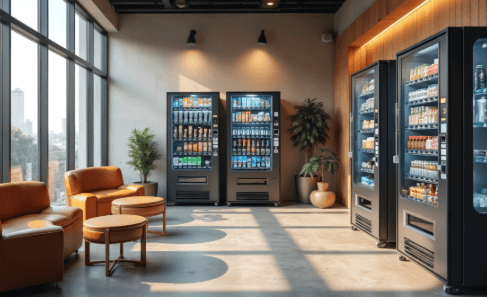
A smart fridge vending machine is a refrigerated, self-service unit equipped with sensor technology, cloud connectivity, and automated transaction processing. It holds perishable or semi-perishable products — typically fresh food, beverages, and health items — and allows users to access them without a cashier or attendant. The assumption that these units only make financial sense for large organizations with high foot traffic has caused mid-size employers, smaller campuses, and distributed worksites to dismiss them before doing any real analysis.
The reality is that modern smart fridge vending machines are available across a wide range of configurations that suit populations as modest as forty to fifty daily users. Vendors now offer flexible stocking arrangements, remote monitoring that reduces service visit frequency, and pricing models that adjust based on volume. The fixed cost assumptions that once made these units impractical for smaller sites no longer reflect what the market actually offers.
What Businesses Are Actually Losing by Waiting
When a facility manager or operations director delays implementation based on size assumptions, the business absorbs quiet but consistent costs. Employees leave the premises for meals, which extends break periods. Productivity dips are rarely tracked against food access gaps, which makes the problem invisible in reporting — but not in output. Facilities that have introduced refrigerated vending in spaces previously underserved by food options consistently report reduced off-site break activity and measurable improvements in how employees rate their workplace environment.
The barrier is not unit size or operational complexity. It is the belief, still widely held, that this category of equipment is built only for high-volume environments. That belief is outdated and, for many organizations, expensive.
Myth 2: The Technology Is Unreliable and Requires Constant Maintenance
Early refrigerated vending units — those deployed in the mid-to-late 2010s — were often plagued by connectivity issues, sensor inaccuracies, and mechanical failures that required frequent service visits. Those experiences left a lasting impression on facility and operations teams. Many organizations that encountered problems with first-generation equipment have carried those impressions forward, treating them as current fact when evaluating newer options.
Current-generation units have addressed the majority of those failure points. Temperature regulation systems are now more stable and operate with built-in redundancy. Inventory tracking relies on weight-based sensors, RFID, or computer vision rather than mechanical counting, which has dramatically reduced miscount rates. Remote diagnostics allow operators to identify issues before they cause unit downtime, and in many cases, technical interventions can be performed without a physical service visit.
How Maintenance Expectations Should Actually Be Set
Any equipment category carries a maintenance profile, and refrigerated vending is no different. The relevant question is not whether maintenance is required, but how frequently, at what cost, and with what operational disruption. For most current-generation units operating in climate-controlled interior environments, scheduled preventive maintenance intervals are comparable to other commercial refrigeration equipment. Unplanned failures, when they occur, are typically flagged remotely before product integrity is compromised.
Organizations that have updated their maintenance assumptions to reflect current equipment performance generally find that actual service costs are well within acceptable range. Those still operating on decade-old assumptions are making budget decisions against a standard that no longer applies.
Myth 3: Smart Vending Is Impersonal and Employees Will Not Use It
There is a recurring argument, particularly from HR and culture-focused stakeholders, that automated food service removes a human element that matters to employee experience. The concern is that employees prefer staffed cafeterias or break rooms managed by real people, and that replacing or supplementing those with vending technology signals a reduction in care or investment.
This argument misidentifies the problem. The issue is not automation versus human service — it is access versus no access. In many facilities, staffed food service is not economically viable. The realistic alternative to a smart fridge vending machine is not a full cafeteria; it is nothing. When the comparison is framed accurately, adoption rates are consistently strong across industries and workforce demographics.
What Actual Usage Data Shows
Facilities that have introduced refrigerated smart vending in locations where employees previously had no convenient food access report high utilization, particularly during early morning shifts, late afternoon hours, and weekend operations when staffed options are unavailable or reduced. The unit does not replace preference for human interaction — it fills a gap that exists regardless of preference.
Product selection also plays a significant role. Units stocked with items that reflect the actual eating patterns and dietary preferences of the workforce perform substantially better than those stocked with generic options. Operators who invest in understanding their population and refreshing inventory accordingly see continued engagement well past the initial deployment period.
See also: Maximizing Business Success Through Digital Marketing
Myth 4: Cashless and App-Based Payment Systems Create Barriers for Workers
As smart vending units have moved away from coin and bill mechanisms toward digital payment systems — contactless cards, mobile wallets, and employer-issued digital accounts — some decision-makers have raised concerns about access equity. The argument is that not all employees carry smartphones or have access to the payment methods these systems require, making the technology exclusionary in practice.
This concern is not without historical basis. Early cashless implementations in some vending contexts did create friction for certain user groups. However, the payment architecture of current smart vending systems is considerably more flexible. Most units accept a broad range of payment types, including standard debit and credit cards, contactless payment, and employer-managed payroll deduction or prepaid account systems. The assumption that cashless means app-only reflects an outdated understanding of how these systems are actually configured.
Designing for the Actual Workforce
Payment flexibility is a configuration decision, not a hardware limitation. Employers working with vending operators can specify the payment methods that best match their workforce demographics. Payroll deduction arrangements, for example, are particularly effective in manufacturing and logistics settings where smartphone ownership varies and employees prefer not to carry payment cards during shifts. According to the FDIC’s national survey on household use of banking and financial services, the banked and underbanked population is shifting steadily toward digital payment adoption, and vending systems are adapting in parallel.
The barrier, where it exists, is almost always a configuration issue that can be addressed in the deployment planning phase — not a structural limitation of the technology itself.
Myth 5: The Upfront Cost Makes Smart Fridge Vending Financially Impractical
Capital expenditure concerns are among the most common reasons businesses delay or decline implementation. The perception is that smart vending units carry significant upfront costs that are difficult to justify against uncertain returns, particularly for organizations where food service is not a core business function.
This framing misrepresents how the market actually works. Many smart vending operators offer placement models in which the unit is provided at no purchase cost to the host business, with the operator retaining a share of product revenue. In employer-subsidy arrangements — where the business subsidizes product pricing as an employee benefit — the cost structure is negotiated against a clearly defined benefit metric rather than treated as a capital investment requiring conventional ROI analysis.
The Real Financial Risk Is in Inaction
When the cost of implementation is assessed in isolation, the numbers can appear unfavorable. When assessed alongside the cost of the problem the unit is meant to address — extended breaks, off-premises meal purchases eating into productivity, employee dissatisfaction contributing to turnover — the financial picture changes substantially. Turnover costs alone, which include recruitment, onboarding, and temporary productivity loss, consistently outpace the cost of employee satisfaction initiatives that include accessible food service.
The myth that smart vending is financially impractical often persists because the savings it prevents are distributed across categories that are not tracked together. When organizations build a complete picture of what poor or absent food access costs them operationally, the upfront concern typically diminishes.
Closing Perspective
The myths outlined here are not frivolous. Each one reflects a real concern that deserves to be taken seriously — about cost, reliability, access, and workforce culture. The problem is not that decision-makers are asking the wrong questions. It is that the answers they are working from no longer reflect the current state of the technology or the market.
Smart vending in refrigerated formats has matured substantially over the past several years. The equipment is more stable, the payment systems are more flexible, the deployment models are more accessible, and the operational evidence from facilities that have adopted them is considerably more positive than early-generation experiences suggested. Businesses that continue to make decisions based on outdated assumptions are not being cautious — they are absorbing real, recurring costs that better information would help them avoid.
Revisiting these assumptions with current data is not a large investment of time. But the return on doing so — whether in avoided costs, improved workforce satisfaction, or better-structured vendor agreements — is consistently meaningful for the organizations that take the time to look carefully.