PDT LED Light Therapy Machine Buying Guide: What US Beauty Professionals Should Demand From Any Device
Light therapy has become a standard service offering across licensed esthetics practices, medical spas, and dermatology-adjacent clinics throughout the United States. As the category has grown, so has the number of devices entering the market — many of which are sold primarily on price, aesthetic design, or vague clinical language rather than on the technical standards that actually matter to working professionals.
For operators running treatment schedules five or six days a week, the difference between a reliable device and an unreliable one is not abstract. It shows up in client outcomes, repeat bookings, equipment downtime, and ultimately in the financial health of the practice. The decision to purchase a device of this type deserves more than a surface-level product comparison. It requires a clear understanding of what the technology does, what separates professional-grade equipment from consumer-grade hardware, and what minimum standards any serious device should meet before being introduced into a clinical workflow.
This guide is written for licensed professionals and practice owners who are in an active buying cycle or evaluating their current equipment against what the market now offers.
What a PDT LED Light Therapy Machine Actually Does in a Professional Setting
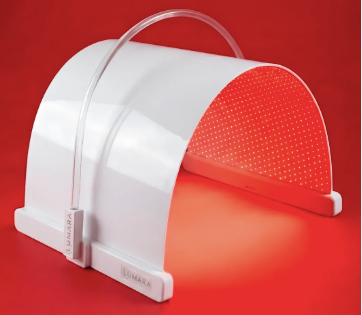
Photodynamic therapy using LED panels works by delivering specific wavelengths of visible light to the skin at controlled exposure durations. The process does not generate heat in the conventional sense and does not involve ablation or physical disruption of the skin surface. Instead, it relies on photobiomodulation — the absorption of light energy by cells, which in turn influences biological processes including inflammation response, collagen synthesis, and surface healing. When professionals search for a pdt led light therapy machine, they are looking for equipment capable of delivering this process consistently and safely across repeated treatment cycles with diverse client populations.
In a professional context, this means the device must do more than produce visible light. It must produce the correct wavelengths with sufficient intensity, maintain that output consistently across the life of the device, and do so without creating variability that undermines treatment repeatability. These are engineering and manufacturing standards, not marketing claims, and they are what separate devices built for clinical use from those assembled to a retail price point.
The Role of Wavelength Accuracy in Treatment Outcomes
Each wavelength used in LED light therapy corresponds to a different depth of skin penetration and a different cellular response. Red wavelengths are generally associated with deeper tissue engagement and are commonly used in protocols addressing textural concerns and skin recovery. Blue wavelengths work closer to the surface and are frequently applied in protocols targeting oiliness and breakout-prone skin. Near-infrared sits beyond the visible spectrum and reaches even deeper tissue layers.
What matters for professionals is not the theoretical description of these wavelengths but whether a given device actually delivers them as stated. Devices that advertise specific wavelength outputs but do not maintain those outputs under real operating conditions — as units age, as temperatures fluctuate, as components degrade — will produce inconsistent results. This is one of the most common sources of client dissatisfaction in practices that do not regularly evaluate their equipment performance.
Consistency Over Time Is a Functional Requirement, Not a Feature
LED diodes degrade over time. This is a basic characteristic of the technology. What varies between manufacturers is how quickly degradation occurs, whether the device is designed to compensate for it, and whether the stated output at time of purchase reflects real-world output after extended use. A device that performs well in month one but delivers diminished results by month eight creates a clinical reliability problem that is difficult to diagnose without proper testing equipment.
Professional buyers should ask manufacturers directly about expected diode lifespan, how output stability is maintained over time, and what validation testing was conducted before the product was released to market. Manufacturers who cannot answer these questions with specificity have typically not prioritized this aspect of engineering.
How Professional-Grade Devices Differ From Consumer Units
The physical appearance of a device does not indicate its classification. There are consumer-facing products and professional devices that look nearly identical in marketing photographs, yet differ substantially in their construction, component quality, and intended use environment. The distinction between these categories is not simply about price — it is about whether the device was designed and tested for multi-client, high-frequency clinical use or for occasional personal applications.
Duty Cycle and Thermal Management
Duty cycle refers to the proportion of time a device can operate continuously or near-continuously before requiring cooling or rest. In a practice running back-to-back appointments, a device with a low duty cycle becomes a scheduling constraint. More importantly, devices that are operated beyond their intended duty cycle tend to experience accelerated component degradation, which affects output quality and shortens the usable lifespan of the equipment.
Thermal management — how the device handles the heat generated by its LED arrays — is closely related to duty cycle. Professional devices typically incorporate active cooling systems or heat dissipation structures designed to maintain stable operating temperatures throughout a full treatment day. Consumer devices are often built without these systems because they are not intended for continuous professional use. Running them in a clinical environment produces predictable problems over time.
Panel Size, Coverage, and Ergonomics in Practice
Treatment efficiency in a busy practice depends partly on how much surface area a device can address in a single session. Larger treatment panels reduce the need for repositioning and allow for more consistent coverage of the face and décolletage in a single pass. This is not a luxury consideration — it directly affects how long each appointment takes and how uniformly the treatment is applied.
Ergonomics matter as well. A device that is difficult to position, awkward to adjust, or unstable during treatment creates physical strain for practitioners over the course of a full week of appointments. Build quality in hinges, joints, adjustable arms, and mounting systems reflects whether the manufacturer designed for repeated daily use by a professional or for infrequent use in a domestic setting.
See also: Test Kits Kitting and Fulfillment: The Complete Operational Guide for US Healthcare Distributors
Regulatory Standards and Safety Certifications That Matter in the US Market
Devices sold in the United States for professional use are subject to federal oversight depending on their classification. The Food and Drug Administration maintains regulatory authority over light-based devices, and the level of regulatory scrutiny a device has received tells buyers something meaningful about the manufacturer’s commitment to safety and clinical validity. Buyers can review relevant guidance through the FDA’s medical devices portal, which provides searchable records of cleared and approved devices as well as guidance on device classification categories.
What Clearance Status Tells You About a Device
A device that has received FDA clearance has been reviewed against established safety and effectiveness standards. This does not mean the device is perfect or that every claim made by the manufacturer has been validated, but it does indicate a baseline of regulatory engagement. Devices sold without any regulatory documentation in the US market represent an unknown risk — both for client safety and for the professional’s liability exposure should an adverse outcome occur.
Practitioners operating in states with active board oversight of esthetic services should verify that any device they introduce into their practice is appropriate for their license category. State regulations vary, and some procedures require medical supervision depending on the device classification and treatment application.
Electrical Safety and Build Standards
Electrical safety certifications — such as those issued by recognized testing laboratories for products sold in the US market — confirm that a device meets minimum standards for electrical construction and user safety. These certifications are not marketing designations. They represent third-party verification that the device was tested under standardized conditions and found to meet applicable safety requirements. Devices that lack these certifications may have been manufactured without independent testing, which introduces risk in a professional environment where equipment is used in close proximity to clients over extended periods.
Evaluating Manufacturer Support Before You Buy
Equipment purchases in the professional beauty and wellness space often come with surprisingly weak after-sale support. This is a systemic problem in the category, and it has real consequences for practices that experience technical issues, need replacement components, or require guidance on protocol updates.
What Adequate Support Actually Looks Like
Before committing to any device, professionals should verify that the manufacturer maintains a reachable technical support team — not just an email form — and that replacement parts for the specific unit are available and not subject to long lead times. Devices built on proprietary components that are only available from the original manufacturer at unpredictable lead times are a risk to operational continuity.
Warranty terms deserve careful reading as well. Warranties that exclude common failure points — such as diode arrays, power supplies, or control panels — provide less protection than they appear to. A warranty that covers the enclosure but excludes the components most likely to require service over a two-year period is functionally limited in scope.
Training and Protocol Resources
A manufacturer that provides structured onboarding, clinical protocol guidance, and ongoing education is investing in the professional’s ability to use the device correctly and achieve consistent outcomes. This matters beyond the first few weeks of use. As research in photobiomodulation continues to develop, updated protocols and application guidance help practitioners stay current and adapt their services accordingly. Manufacturers who offer no ongoing education after purchase are often more focused on volume sales than on client outcomes.
Closing Considerations for Professionals Making This Decision
Choosing a pdt led light therapy machine is a capital decision with long-term operational implications. The questions that matter most are not about design aesthetics or introductory pricing — they are about wavelength accuracy over time, engineering for professional-frequency use, regulatory standing, and the manufacturer’s capacity to support the device after purchase.
Professionals who treat this purchase with the same scrutiny they apply to other major equipment investments — asking direct questions, requesting documentation, evaluating manufacturer responsiveness during the sales process — are far more likely to end up with a device that performs reliably across years of clinical use rather than one that creates scheduling disruptions and client experience problems within the first year.
The market for this category of equipment is broad and uneven. Not all devices are built to the same standard, and price alone is not a reliable proxy for quality or durability. Understanding what actually distinguishes professional-grade hardware from lower-tier alternatives is the foundation of a purchase decision that holds up over time.