The True Cost of Modern White Oak Kitchen Cabinets in 2025: What US Contractors Won’t Tell You
Kitchen renovation budgets in the United States have shifted considerably over the past several years. Material costs, supply chain disruptions, and changing consumer expectations have all contributed to a market where quoted prices rarely reflect final invoices. For homeowners and project managers planning a kitchen remodel in 2025, understanding the full cost picture before committing to a cabinet specification is not just useful — it is financially necessary.
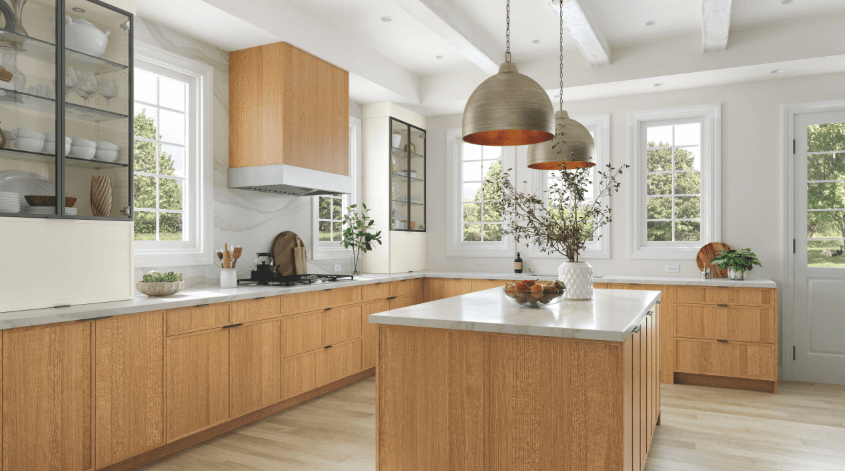
White oak has grown steadily in popularity across residential kitchens, particularly in new construction and high-end remodels. It offers a distinct grain character, dimensional stability, and a natural tone that responds well to both light stains and clear finishes. But the appeal of the material has also made it a vehicle for pricing inconsistency in the contractor market. What gets quoted in a showroom conversation often bears little resemblance to what appears in a contract, and even less resemblance to what gets installed.
This article examines what drives the real cost of a white oak kitchen cabinet project, where contractors tend to obscure value, and what a well-informed client should expect when evaluating bids in today’s market.
What You Are Actually Paying for When You Choose This Material
The pricing around modern white oak kitchen cabinets is not arbitrary, but it is also not always honest. White oak as a cabinet material commands a premium over painted MDF or maple veneer for legitimate reasons — its grain structure, moisture resistance relative to other domestic hardwoods, and the skilled labor required to work with it consistently. However, those premiums are frequently inflated during the bidding process because many buyers cannot distinguish between solid white oak construction and a white oak veneer applied over a less expensive substrate.
When a contractor quotes a white oak kitchen, the specification matters enormously. Cabinet boxes built from solid hardwood behave differently over time than those using veneer-faced plywood or MDF cores. Solid construction is more expensive to source and more demanding to mill accurately, but it also holds fasteners better, responds more predictably to humidity changes, and generally sustains a longer service life in a working kitchen environment.
The Veneer vs. Solid Construction Question
Most contractors will not volunteer information about whether their white oak cabinets use solid wood for the box construction or only for the face frames and door fronts. This distinction can represent a meaningful cost difference in raw materials — and yet the final invoice rarely separates these components in a way that makes the construction method visible to the buyer.
Veneer-faced cabinet boxes are not inherently inferior. In fact, when properly manufactured with quality plywood substrates and stable veneer bonds, they can perform comparably to solid wood boxes in most residential environments. The problem arises when veneer construction is priced as if it were solid wood, or when low-grade substrates are used beneath a white oak veneer face that photographs well but degrades faster under kitchen conditions.
Hardware and Joinery: Where Budget Gets Absorbed Quietly
Cabinet hardware and joinery methods are rarely discussed openly during the early bidding phase. A contractor may quote a complete white oak kitchen installation and include only the most basic soft-close hinges and drawer slides, leaving the cost of upgraded mechanisms, custom pulls, and integrated storage components to be added later as change orders.
Dovetail drawer construction, full-extension slides, and quality hinge systems each carry their own cost. In aggregate, these details can add fifteen to twenty-five percent to the base cabinet cost. When contractors omit these specifications in initial quotes, they create the appearance of a competitive price while preserving room to expand the budget after the client has already committed to the project.
How the Supply Chain Affects Pricing in 2025
White oak availability in the United States has tightened over the past few years. Domestic white oak is grown primarily in the Appalachian region and the Midwest, and while the species is not in shortage, milling capacity and drying time requirements have created periodic delays in delivering kiln-dried, cabinet-grade lumber to manufacturers. This reality affects pricing more than most contractors will acknowledge in an initial consultation.
According to the United States Department of Agriculture’s forestry division, domestic hardwood production has faced ongoing volatility related to both harvesting conditions and processing infrastructure. For cabinet buyers, this means that a quote given in early 2025 may not hold if a project is delayed by several months — and yet contracts are rarely written with material cost adjustment clauses unless the buyer specifically requests them.
Lead Times and Their True Cost
A lead time is not just a scheduling inconvenience. In kitchen renovation projects, cabinet delivery defines the critical path for nearly every other trade: countertop templating, appliance installation, electrical trim-out, and finish work all follow cabinet placement. When a contractor underestimates lead times — or quotes a shorter lead time to win a bid — the downstream cost of delay falls on the client, not the contractor.
White oak cabinet projects that involve custom sizing, unusual door profiles, or specific finish specifications consistently take longer to produce than standard cabinet lines. The contractor’s incentive is to minimize perceived complexity during the sale. The client’s responsibility is to press for written lead time commitments before signing.
Import Pricing and Its Limitations
Some contractors source white oak cabinet components from overseas manufacturers to reduce costs. This is not automatically a problem — quality cabinet manufacturing exists in multiple countries — but the cost advantage of imported components is frequently overstated, and the risks are not always disclosed.
Import lead times are longer and less predictable than domestic sourcing. Quality control is harder to verify remotely. And when something is wrong with a delivered batch — whether dimensional inaccuracy, finish inconsistency, or structural defect — the resolution timeline is far longer than it would be with a domestic manufacturer. The apparent savings on a per-cabinet basis can erode quickly when a project is delayed or when components need to be replaced.
See also: Why Alarm Installation Is Essential for Home Security
Installation Costs Are Almost Always Underrepresented
Cabinet installation in a kitchen is more complex than it appears, and the labor cost associated with white oak projects is consistently underrepresented in the initial project quote. White oak is a relatively heavy hardwood. Custom-sized cabinets require more precise scribing and fitting than modular units. In older homes with out-of-level floors and walls, the fitting process adds time that contractors typically handle through change orders rather than accounting for it upfront.
The Scope of Site Preparation
Before a single cabinet can be installed, the walls must be assessed for plumb and level conditions, blocking for wall cabinets must be confirmed, and utility rough-ins must be verified against the cabinet layout. In a significant number of residential projects, this assessment reveals conditions that require remediation before installation can proceed. Contractors who do not include site preparation allowances in their base quotes leave clients exposed to these costs at the least convenient moment — when demolition is complete and nothing can be put on hold.
Finishing After Installation
Many white oak cabinet projects are specified with a raw or lightly pre-finished surface, with the final finish applied on-site after installation. This approach can yield a more cohesive result, as site-applied finishes cover seams and scribe pieces uniformly. However, on-site finishing adds labor time, requires proper ventilation and curing conditions, and extends the period during which the kitchen is out of service.
When this work is included in a project, it should be itemized separately in the contract. When it is bundled into a lump sum, clients have no visibility into what they are paying for or what finish quality standards apply.
Reading a White Oak Cabinet Quote with Accuracy
A well-structured cabinet quote for a white oak kitchen should include the cabinet construction specification in writing, the finish specification including sheen level and application method, hardware species and grade, lead time with a written commitment, installation scope including what is and is not included, and a clear change order policy.
• Cabinet box material should be identified explicitly — whether solid wood, veneer-faced plywood, or MDF core — so the buyer understands the construction hierarchy before agreeing to a price.
• Door and drawer front construction should be described with grain orientation and panel method noted, as these affect both appearance and long-term movement behavior.
• Finish specification should identify whether factory pre-finishing or site finishing is planned, with the product type named so it can be evaluated independently.
• Hardware specification should list hinge brand and weight rating, drawer slide extension and weight capacity, and any soft-close or push-to-open mechanisms included at the base price.
• Lead time commitment should be written into the contract, not provided verbally, with a clear policy on what happens if the manufacturer cannot meet the agreed delivery window.
• Installation scope should distinguish between cabinet installation and ancillary work such as scribing, crown installation, toe kick fitting, and interior accessories.
Concluding Perspective
The interest in white oak for kitchen cabinetry is well-founded. It is a durable domestic hardwood with a visual character that holds its relevance across design directions, and it performs well in kitchen environments when properly specified and finished. The problem is not the material itself — it is the opacity that tends to surround how it is priced and sold in the current US market.
Contractors who present white oak kitchen projects as a straightforward material upgrade without addressing construction method, lead time exposure, installation complexity, or finishing scope are omitting the parts of the conversation that most directly affect the client’s final cost. This is not always intentional, but it is consistent enough to be treated as a pattern rather than an exception.
A client who understands the full picture before signing a contract is in a substantially better position — not because they can negotiate a lower price, but because they can evaluate whether the price they are being offered reflects real value or concealed cost. In 2025, with material prices remaining elevated and labor markets remaining tight, that distinction matters more than it has in previous years.
Taking the time to review specifications, ask direct questions about what is and is not included, and compare quotes at the construction level rather than the surface level will consistently lead to better outcomes than selecting a contractor based on the lowest number on the initial estimate.