The Complete Buyer’s Guide to Sourcing Wheel Weights Wholesale in the United States
For tire shops, automotive service centers, fleet maintenance operations, and automotive parts distributors, wheel weights are a routine consumable. They move quickly, they are replaced constantly, and running short of the right type at the wrong moment disrupts workflow in ways that are difficult to recover from mid-shift. Despite their small physical footprint, they carry real operational weight in any business that handles tire mounting and balancing at volume.
The sourcing decision for wheel weights is rarely treated with the same rigor as other purchasing decisions, and that tends to create problems over time. Inconsistent supply, quality variation between shipments, incompatible clip designs, and compliance gaps with environmental regulations are not hypothetical risks — they are recurring realities for businesses that approach this category without a clear procurement strategy.
This guide is written for purchasing managers, shop owners, fleet supervisors, and operations leads who want to source wheel weights more reliably and with better cost control. It walks through every meaningful consideration: product types, compliance requirements, supplier evaluation, and inventory planning — in practical, operational terms.
Understanding What You Are Actually Buying
Wheel weights are small counterbalance components attached to a vehicle’s wheel rim to correct for mass distribution irregularities that occur during manufacturing or from wear over time. When a wheel and tire assembly is unbalanced, the result is vibration, uneven tire wear, and increased stress on suspension components. Wheel weights correct this by adding measured mass at specific points identified during the balancing process. Working with a reputable wheel weights wholesaler means having consistent access to the full range of types your operation requires, without relying on ad hoc purchasing that leads to gaps or mismatched inventory.
Clip-On vs. Adhesive Wheel Weights
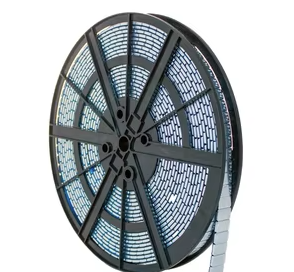
The two primary categories — clip-on and adhesive — serve different rim profiles and vehicle types, and the distinction matters more than many buyers initially realize. Clip-on weights attach to the rim flange and are common on steel wheels and many standard alloy applications. Adhesive weights, sometimes called stick-on weights, bond to the inner barrel of the wheel and are used extensively on alloy wheels where a clip on the outer flange would be visible or structurally incompatible.
Buying the wrong ratio of clip-on to adhesive weights for your customer base creates consistent friction in day-to-day operations. A shop that services a high proportion of newer passenger vehicles with low-profile alloy wheels will burn through adhesive weights quickly, while a fleet maintenance yard handling heavy-duty steel-wheeled trucks will rely almost entirely on clip-on formats. Procurement that does not account for vehicle mix leads to overstocking one type while running short of the other.
Material Matters Beyond Price
Wheel weights have historically been made from lead, and many operations still use lead weights in regions and applications where they remain permitted. However, there has been a sustained industry-wide shift toward steel and zinc alternatives driven by both regulatory pressure and commercial preference. Steel weights offer durability and are compliant with broader environmental standards. Zinc weights fall between lead and steel in terms of density and are often used where a compact profile is required.
The material choice also affects adhesion performance in adhesive weights, corrosion resistance under various climate conditions, and compatibility with certain rim coatings. Buyers sourcing for operations across multiple climates or customer segments should think through material selection with the same care they would apply to any other consumable that touches the vehicle.
Regulatory Compliance and Environmental Standards
Lead wheel weights have been restricted or banned in several U.S. states, and the regulatory picture continues to evolve. California has been among the most active states in restricting the sale and use of lead wheel weights, citing concerns about road runoff and environmental contamination. Several other states have adopted similar restrictions or are in various stages of legislative consideration. Understanding which materials are permissible in the jurisdictions your business operates in is not optional compliance work — it is a basic purchasing requirement.
State-Level Restrictions and What They Mean for Buyers
The patchwork of state regulations creates a real challenge for distributors operating across multiple states and for national fleet operators whose vehicles move between jurisdictions. A product that is legally sold in one state may not be compliant in another. For operations with any multi-state footprint, defaulting to compliant alternatives — steel or zinc — eliminates this complexity entirely and simplifies both purchasing and record-keeping.
Suppliers who operate at wholesale scale should be able to document the material composition of their products clearly and provide confirmation of compliance with applicable state standards. If a supplier cannot readily answer questions about material sourcing and regulatory standing, that is a signal worth taking seriously before committing to a supply relationship.
Industry Standards and Quality Benchmarks
Beyond state environmental regulations, there are industry standards that govern the dimensional accuracy, mass tolerance, and finish quality of wheel weights. The Society of Automotive Engineers, for example, maintains technical standards relevant to wheel balancing components. Buyers sourcing at volume should understand that weight accuracy directly affects balancing outcomes — a weight that is off specification adds errors that compound across the balancing process, leading to callbacks and customer dissatisfaction. Consistency in quality between production runs is one of the most important, and most often overlooked, criteria in evaluating a supplier.
Evaluating Wholesale Suppliers
The wholesale market for wheel weights includes domestic distributors, import-focused suppliers, and direct manufacturer relationships. Each model has real tradeoffs in lead time, minimum order requirements, pricing consistency, and quality control transparency. There is no universally correct structure — the right supplier profile depends on your order volume, your cash flow cycle, your storage capacity, and how much variability your operation can absorb between shipments.
What Consistent Supply Actually Requires
For most tire shops and automotive service businesses operating at meaningful volume, supply consistency matters more than unit price. A supplier who offers a lower per-unit cost but delivers inconsistently — whether in timing, quantity, or product quality — creates downstream costs that are harder to measure but real in their impact. Technicians working with weights of inconsistent quality spend more time on balancing procedures. Callbacks from customers whose wheels are still vibrating after service represent both a labor cost and a reputational cost.
When evaluating a wholesale supplier, the practical questions include how long they have been operating in the wheel weights category specifically, whether they maintain domestic inventory or rely entirely on international shipments, how they handle shortfalls, and whether they can document quality control processes for the products they distribute.
Minimum Order Quantities and Inventory Planning
Wholesale pricing typically comes with minimum order thresholds that require buyers to think ahead about storage and cash flow. For a single-location tire shop, committing to a large inventory position in a single product type can be problematic if vehicle mix shifts or a supplier changes product specifications. For multi-location operations or distributors, larger minimum orders are often manageable and bring meaningful cost advantages.
The most effective approach for most buyers is to establish a baseline inventory level that provides buffer without creating storage strain, set reorder points based on actual consumption rates rather than guesswork, and maintain a secondary supplier relationship so that a single supply disruption does not halt operations. This is not complex inventory management — it is straightforward purchasing discipline applied to a consumable that tends to be managed reactively rather than proactively.
Total Cost of Ownership Beyond Unit Price
The per-unit cost of a wheel weight is rarely the most important number in the purchasing decision, even though it tends to dominate the conversation. Total cost of ownership in this category includes inbound freight, handling requirements, storage space, technician time spent managing inventory, the cost of stockouts, and the cost of returns or replacements when product quality falls short. Buyers who optimize only on unit price often find that savings at the purchase level are eroded by friction elsewhere in the operation.
Freight and Logistics Considerations
Wheel weights are heavy relative to their size, which means freight costs are a meaningful component of the landed cost calculation. Domestic suppliers with regional warehouse infrastructure can offer shorter lead times and lower freight costs than suppliers shipping from overseas. For buyers in high-volume markets, the freight differential between sourcing domestically and importing directly can close or reverse the apparent unit cost advantage of lower-priced international options.
It is also worth accounting for the administrative burden of international purchasing — customs documentation, potential delays, currency considerations, and the difficulty of resolving quality disputes across international supply chains. For most service businesses, these are costs that do not appear on an invoice but are real in their impact on purchasing staff time and operational predictability.
The Hidden Cost of Quality Inconsistency
When wheel weights vary in dimensional accuracy or mass tolerance between production runs — a common issue with low-quality wholesale suppliers — the variability shows up in balancing outcomes. Technicians may not immediately identify the source of the problem, and the shop may experience an uptick in comebacks before the root cause is traced to the product rather than the process. Investigating and resolving quality issues at this level is time-consuming and often disruptive to daily scheduling. Paying a modest premium for a supplier with documented quality control is, in most cases, a straightforward value trade.
See also: The Ultimate Guide to Grounding Products for Better Health
Building a Reliable Procurement Framework
The businesses that manage wheel weight procurement most effectively are not necessarily the ones with the lowest unit costs or the largest orders. They are the ones that have taken the time to define their actual consumption patterns, match their product mix to their vehicle service profile, and establish supplier relationships with enough structure to withstand occasional disruption.
A practical procurement framework for this category involves a few consistent practices. First, track consumption by weight type and material rather than managing the category as a single line item. Second, build reorder triggers based on real usage data rather than visual inspection of bin levels. Third, document supplier performance across multiple dimensions — not just price, but delivery reliability, product consistency, and responsiveness when problems arise.
Fourth, review the regulatory environment at least annually, particularly if your operation spans multiple states or you are currently sourcing lead weights. The regulatory direction in this category has been consistent, and preparing for expanded restrictions ahead of their implementation is far less disruptive than reacting to them after they take effect.
Finally, treat the supplier relationship itself as part of the procurement strategy. Wholesale suppliers who understand your business volume and service profile are better positioned to flag supply constraints early, prioritize your orders during tight periods, and offer relevant product additions as the market evolves. That kind of working relationship requires communication, but it delivers reliability that purely transactional purchasing does not.
Closing Thoughts on Sourcing This Category Well
Wheel weights occupy an unusual space in automotive procurement. They are small, inexpensive individually, and easy to treat as a commodity afterthought. But at volume, the decisions made around product type, material compliance, supplier quality, and inventory structure add up to real differences in operational efficiency and service consistency.
The buyers who get the most out of this category are the ones who apply the same level of purchasing rigor to wheel weights as they would to any other consumable that directly affects the quality of work leaving their shop or facility. That means understanding the product well enough to specify it accurately, knowing the regulatory requirements for their markets, and building supplier relationships that prioritize consistency over the lowest possible line-item cost.
This guide is intended to give purchasing managers and operations leaders a structured way to think through each of those dimensions — not as a checklist, but as a connected set of decisions that, when made thoughtfully, reduce friction and improve outcomes across the entire balancing workflow.