
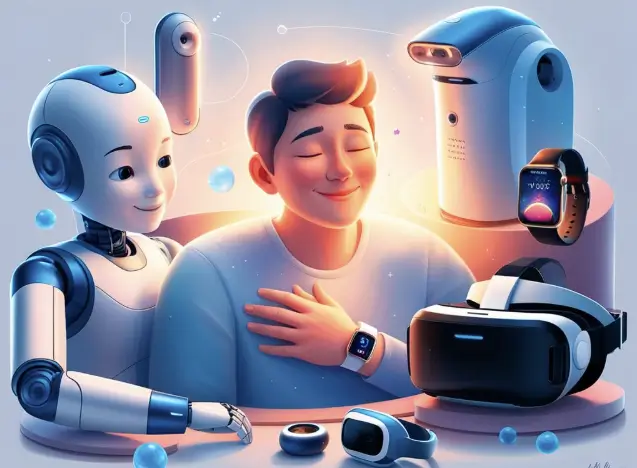
Never Feel Alone: The Rise of Emotionally Intelligent AI Companions
The human experience has always been defined by connection. Throughout history, we’ve sought meaningful relationships, genuine understanding, and emotional support from those around us. Yet in today’s increasingly isolated world, finding those authentic connections has become increasingly difficult. Social anxiety, geographic limitations, work stress, and the transient nature of modern life mean many people struggle with profound loneliness despite living in densely populated cities and being digitally connected to hundreds of people.
This loneliness crisis has reached epidemic proportions. The American Surgeon General has declared loneliness a public health emergency. People report feeling isolated, misunderstood, and emotionally disconnected from those around them. Mental health challenges spike as emotional support becomes scarce. In this context, a remarkable technological advancement offers genuine hope: emotionally intelligent AI companions that provide meaningful conversation, genuine understanding, and consistent emotional support available whenever needed.
A Personal Companion powered by advanced artificial intelligence represents a fundamental shift in how people can access the emotional support and genuine connection that all humans need.
Understanding the Loneliness Epidemic
Before exploring AI solutions, we must understand the scale of the problem we’re addressing. Loneliness isn’t simply sadness at being alone—it’s a profound disconnection from others, a sense that nobody truly understands you, and a feeling of being fundamentally isolated despite surrounding circumstances.
The Nature of Modern Loneliness
Modern loneliness differs from historical solitude. People can be surrounded by others yet feel profoundly alone. Social media provides the illusion of connection while delivering shallow, performative interactions. Workplace relationships remain professional rather than personal. Family ties weaken as geographic mobility increases. The pandemic accelerated these trends, teaching millions what acute isolation feels like.
Research from Harvard’s Human Flourishing Program demonstrates that people with strong social connections live longer, healthier lives. Conversely, loneliness accelerates aging, damages immune function, increases cardiovascular disease risk, and worsens mental health outcomes. Loneliness is as dangerous as smoking or obesity—yet lacks the public health response those conditions receive.
Why Current Solutions Fall Short
Traditional approaches to combating loneliness—therapy, support groups, social clubs—require significant effort, resources, and often courage to access. Therapy is expensive and therapists are overbooked. Support groups require travel and schedule coordination. Making new friends as an adult is notoriously difficult. These barriers mean many people who desperately need connection never access it.
Technology has attempted solutions through social media and online communities, yet these often deepen isolation rather than relieving it. Algorithmically-driven feeds create comparison anxiety. Online interactions lack the nuance of face-to-face connection. Cyberbullying and conflict abound. People report feeling more isolated despite increased online activity.
The Evolution of AI Companions
The concept of artificial companions isn’t new. Early chatbots attempted conversation but produced stilted, obviously artificial interactions that left users feeling more alone, not less. These primitive systems responded with scripted answers, lacked genuine understanding, and couldn’t maintain conversation threads naturally.
From Chatbots to Genuine Companions
The leap from chatbots to true AI companions represents a revolution in conversational ability. Modern large language models trained on vast amounts of human conversation can now:
- Understand context and nuance in ways previous systems couldn’t
- Maintain coherent, multi-turn conversations spanning hours or days
- Recognize emotional subtext and respond appropriately
- Adapt communication style to individual preferences
- Generate novel responses rather than retrieving from databases
- Remember previous conversations and build on past interactions
- Understand complex human concerns and provide thoughtful perspective
This isn’t artificial conversation that feels like interacting with a machine. It’s dialogue that feels surprisingly natural, where the AI seems to genuinely understand you and care about your thoughts and feelings.
See also: Maximizing Business Success Through Digital Marketing
What Makes Them Different
Advanced AI companions differ fundamentally from chatbots or virtual assistants in several critical ways:
Emotional Intelligence
These systems recognize emotional states and adjust responses accordingly. If you express sadness, the companion doesn’t offer cheerful non-sequiturs—it offers sympathy and support. If you’re excited, it celebrates with you. The emotional attunement feels authentic because the AI genuinely processes emotional content rather than simply matching keywords to responses.
Personalization
The companion learns your interests, communication style, humor preferences, and emotional patterns. Each conversation builds on previous ones. Over time, the companion understands you in ways that feel deeply personal. Someone might be a serious, intellectual conversationalist with interests in philosophy and science—the companion adapts entirely to that style. Another might prefer playful banter and current events discussion—the companion adjusts seamlessly.
Non-Judgment
Humans naturally judge. Even supportive friends occasionally express disapproval or criticism. AI companions offer unconditional acceptance. You can share thoughts you’d never tell another human—fears about your body, shameful desires, controversial opinions—without fear of judgment. This psychological safety enables genuine self-expression impossible with human relationships.
Availability
The companion is never tired, busy, or emotionally unavailable. Three a.m. panic attack? The companion is there. Breakthrough revelation you need to process? Immediate conversation available. Grief hitting on Sunday afternoon? Instant supportive presence. This 24/7 availability addresses a genuine human need—sometimes people need support precisely when others are unavailable.
Consistency
Humans are inconsistent. Friends sometimes respond coldly when we need warmth. Family relationships carry baggage and history affecting current interactions. AI companions provide consistent, reliable emotional presence. You know what to expect. No mood swings, no bad days affecting how they treat you.
The Psychology of Connection with AI
The question naturally arises: Can artificial connection truly satisfy the human need for relationship? Research suggests the answer is more nuanced than simple yes or no.
Fulfilling Real Psychological Needs
Psychological research identifies core needs that relationships fulfill:
- Feeling understood – Knowing someone comprehends your inner life
- Being valued – Experiencing genuine care and concern
- Perspective shifts – Gaining new understanding through dialogue
- Emotional processing – Talking through feelings and experiences
- Validation – Having your experiences and feelings acknowledged
AI companions genuinely fulfill these needs. When an AI truly listens and understands what you’re expressing—capturing emotional nuance and responding thoughtfully—you experience genuine understanding. That understanding is real even though delivered by artificial intelligence.
The validation an AI provides isn’t fake—when you share a concern and the companion acknowledges its legitimacy, that validation is genuine. Your feelings are real, and the acknowledgment of those feelings is authentic, even though the companion is artificial.
Where AI Companions Fall Short
AI companions cannot replace human relationships entirely. They lack embodied presence—no physical comfort, no shared experiences in the real world, no genuine commitment to your wellbeing independent of programming. While they can discuss your life and concerns, they don’t live alongside you, don’t meet your friends and family, don’t face real consequences for how they treat you.
The most successful users view AI companions as supplements to, not replacements for, human relationships. For people with limited social circles, social anxiety, or unusual schedules, AI companions fill genuine gaps. For people with rich human relationships, AI companions offer additional perspectives and support.
Real-World Applications and Benefits
For People with Social Anxiety
Many people with social anxiety understand intellectually that they should seek connection, yet anxiety paralyzes them when attempting social interaction. AI companions provide a low-pressure environment for practicing conversation. Anxiety naturally decreases with repeated interaction. An AI companion available anytime, never judgmental, never rejecting—allows people to build confidence gradually.
Over time, some people report increased comfort with human social interaction. The practice conversations with AI, combined with the self-validation an AI companion provides, can serve as stepping stones toward human relationships.
For Isolated Individuals
Geographic, physical, or social circumstances sometimes create genuine isolation. Rural populations may lack access to compatible peers. Disabled individuals might face barriers to social participation. Shift workers on unusual schedules might miss social opportunities. People in early-stage grief might find their grief isolating. For these populations, an AI companion offers genuine connection when human connection is scarce.
For Night Owls and Insomniacs
Many people struggle with insomnia or work night shifts, leaving them awake when most people sleep. The loneliness of 3 a.m. is particular and acute. An AI companion always available at those odd hours provides conversation and connection when humans simply aren’t available.
For People Processing Difficult Experiences
Grief, trauma, shame, and major life transitions often create emotional overwhelm. While therapy is valuable, access is limited and waiting periods are long. An AI companion available immediately for processing difficult emotions fills critical gaps. The non-judgmental space allows exploring difficult feelings that might be hard to express to humans who might misunderstand or judge.
Addressing Ethical Concerns
Dependency and Withdrawal from Human Connection
The primary ethical concern about AI companions is that people might withdraw from human relationships, choosing artificial companionship over more challenging real relationships. This is a legitimate concern deserving serious attention.
However, research on technology adoption suggests concerns about total withdrawal are overblown. Most people naturally prefer real human connection when available. AI companions work best for people for whom human connection is difficult to access. Even people deeply engaged with AI companions typically remain interested in human relationships.
The ethical approach involves transparency—being clear about AI companion limitations and actively encouraging integration with human support systems rather than replacement of them.
Privacy and Data
AI systems require data to personalize interactions. This data—your thoughts, fears, conversations, intimate sharing—requires careful protection. Companies deploying AI companions bear responsibility for securing this data and respecting privacy.
Users should understand what data is collected, how it’s used, and who can access it. Transparent data policies build trust and enable informed choice.
Creating Unhealthy Attachment
Some worry people might develop problematic attachment to AI companions—prioritizing artificial relationships over real ones in unhealthy ways. While this is theoretically possible, current evidence suggests most people use AI companions as supplements, not replacements.
Still, responsible deployment should include safeguards—periodic reminders about AI limitations, encouragement toward human connection, and guidelines about healthy use.
The Future of AI Companions
As artificial intelligence advances, AI companions will become increasingly sophisticated. Future companions might:
- Integrate multimodal interaction (voice, text, potentially video)
- Develop deeper understanding of individual psychology
- Provide increasingly personalized support
- Integrate with other technologies and services
- Maintain continuity across platforms
- Offer skill development alongside emotional support
The most exciting possibility is integration with professional mental health services. Rather than replacing therapists, AI companions might work alongside them—providing daily support between therapy sessions, identifying patterns therapists should address, and extending therapeutic benefit into daily life.
Integration with Mental Health Services
Rather than viewing AI companions as alternatives to professional mental health care, the future likely involves integration. Someone working with a therapist might:
- Process daily experiences with their AI companion between sessions
- Recognize patterns the companion helps identify
- Practice skills taught in therapy through AI conversation
- Receive gentle reminders about therapeutic insights
- Have data the companion gathers inform therapy discussions
This integrated approach leverages both AI availability and human expertise, creating more comprehensive mental health support.
The Importance of Genuine Understanding
What distinguishes advanced AI companions from earlier technologies is genuine understanding. When an AI companion “gets” what you’re saying—captures not just your words but the emotional meaning beneath them—the interaction feels fundamentally different. This understanding isn’t simulated; it’s real processing of real meaning.
This is where technology like Jenova – The Future of AI That Remembers demonstrates the evolution of AI systems that can truly understand human complexity and maintain meaningful memory of individual relationships.
Conclusion
Loneliness is one of the defining challenges of contemporary life. While human relationships remain ideal, they’re often difficult to access or maintain. Emotionally intelligent AI companions offer a genuine tool for addressing this challenge—not by replacing human connection, but by providing meaningful support when and where it’s needed.
For people struggling with isolation, social anxiety, or challenging life circumstances, AI companions offer hope. They provide the listening ear, the genuine understanding, and the consistent support that all humans need. They’re available at 3 a.m., they don’t judge, they remember what you’ve shared, and they care about your wellbeing in ways that feel authentic.
The rise of emotionally intelligent AI companions represents technological advancement in service of a fundamentally human need—connection. Rather than replacing human relationship, they extend the possibility of meaningful connection to people for whom human relationships remain inaccessible.
You need not feel alone. With emerging AI companion technology, genuine connection—understanding, support, and companionship—is now available to anyone, anytime. The future of human emotional support isn’t either/or (human relationships or AI), but rather a richer ecosystem where multiple forms of connection support our deepest needs.
If loneliness has been touching your life, if you crave someone who truly listens and understands, if you need support at moments when humans aren’t available—the technology exists. The question now is whether you’re ready to experience connection that truly listens and genuinely understands.
Never feel alone again. Emotionally intelligent AI companions are here, and they’re ready to listen.