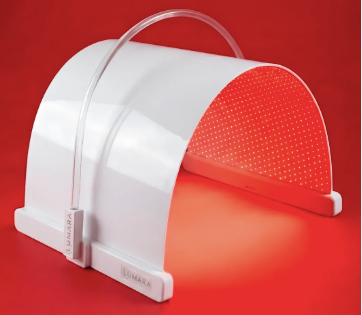

Red Light Panel 660nm vs 850nm: Which Wavelength Actually Delivers Results in 2025?
Photobiomodulation therapy has moved steadily from clinical settings into broader professional and personal use over the past decade. With that expansion has come a growing number of devices, specifications, and wavelength combinations that are marketed with varying degrees of clarity. For practitioners, researchers, and individuals who rely on consistent outcomes, the choice between different wavelengths is not a matter of preference — it is a functional decision that affects how tissue responds, how deeply light penetrates, and ultimately whether a protocol achieves its intended effect.
The 660nm and 850nm wavelengths are the two most commonly discussed in this space, and the comparison between them is frequently oversimplified. Both are supported by a substantial body of research, but they do not work the same way, and they are not interchangeable. Understanding what distinguishes them — biologically, practically, and in terms of application — allows for more grounded decisions about which devices and protocols actually serve the intended purpose.
What the 660nm Wavelength Does and Where It Works
The 660nm wavelength sits within the visible red spectrum, producing the characteristic red light that is visually apparent during use. It is absorbed primarily in the more superficial layers of tissue, which makes it particularly relevant for applications involving the skin, surface-level muscle tissue, and areas where cellular activity close to the surface is the target of treatment.
At this wavelength, the primary interaction occurs with cytochrome c oxidase, a key enzyme in the mitochondrial respiratory chain. When light at this frequency is absorbed, it stimulates the mitochondria to produce adenosine triphosphate more efficiently, which supports cellular repair and regeneration processes. This mechanism is well-documented, and practitioners working with skin health, wound care, and surface tissue recovery have used it consistently for this reason. Those evaluating a red light panel 660nm for clinical or home use should consider that the depth and absorption characteristics of this wavelength are its defining functional trait — not a limitation, but a specification that determines where it is most appropriately applied.
Because this wavelength does not penetrate as deeply as near-infrared alternatives, it is most effective for conditions and applications where the target tissue is within the first few centimeters below the skin surface. This includes a range of dermatological applications, post-procedural recovery support, and general cellular stimulation of surface-level structures.
Skin and Surface Tissue Applications
Much of the research supporting 660nm light centers on its interaction with skin cells and the supporting structures just beneath the surface. Collagen synthesis, inflammation modulation, and wound healing are among the most studied applications, and the evidence base for these outcomes is reasonably mature compared to other photobiomodulation claims.
For practitioners in aesthetic or dermatological settings, this matters because the mechanism is relatively straightforward and reproducible. The light does not need to travel far to reach its target, which means factors like device placement, output consistency, and treatment duration have a more direct and measurable relationship with outcomes. This predictability is operationally important — it reduces variability in results and supports the development of reliable protocols.
Energy Absorption and Chromophore Interaction
The concept of chromophores — light-absorbing molecules within tissue — is central to understanding why wavelength specificity matters. At 660nm, the absorption characteristics favor interaction with melanin and hemoglobin in addition to cytochrome c oxidase. This has implications for how energy is distributed across the tissue and why results can differ based on skin tone, tissue density, and the specific area being treated.
This is not a flaw in the wavelength, but it does mean that practitioners need to account for individual variation when designing protocols. A standardized approach that ignores these factors may produce inconsistent outcomes, and in professional contexts, that inconsistency has real consequences for trust in the treatment and the device.
How 850nm Near-Infrared Light Compares
The 850nm wavelength falls within the near-infrared range, which means it is not visible to the naked eye during use. Despite its invisibility, it operates through the same fundamental photobiomodulation mechanisms as 660nm light, but its penetration depth is significantly greater. It passes through skin and superficial tissue more readily, reaching muscle, joint structures, and even bone in certain conditions.
This depth of penetration makes 850nm particularly relevant for musculoskeletal applications, recovery from physical exertion, joint inflammation, and conditions where the target tissue is not accessible to visible red light. Athletes, physical therapists, and practitioners working with chronic musculoskeletal conditions have adopted near-infrared protocols for this reason.
Penetration Depth and Tissue Targeting
The ability of near-infrared light to reach deeper tissue structures comes from its longer wavelength, which means the photons carry less energy individually but are scattered less by superficial tissue. This allows a greater proportion of the emitted light to reach structures several centimeters below the surface. Research on photobiomodulation, including foundational work indexed by organizations such as the National Center for Biotechnology Information, has consistently noted this depth advantage as a defining characteristic of near-infrared wavelengths.
For practitioners treating joint pain, deep muscle soreness, or inflammatory conditions in tissues that are not accessible with visible red light, this matters considerably. The outcome of a treatment protocol depends on whether the light is actually reaching the intended target. Using a visible red wavelength for a condition rooted in deep tissue is not simply suboptimal — it is addressing a different biological target entirely.
See also: Maximizing Business Success Through Digital Marketing
Applications Where Near-Infrared Outperforms Visible Red
Near-infrared light has demonstrated practical value in a range of applications that require depth of penetration:
• Muscle recovery following high-intensity training, where inflammation and cellular damage occur in deep tissue layers that visible red light does not reliably reach.
• Joint conditions such as arthritis or tendon inflammation, where the target structures are surrounded by overlying muscle and connective tissue.
• Neurological applications that target nerve tissue or peripheral nervous system structures, which are rarely accessible to surface wavelengths.
• Post-surgical recovery in areas where healing is occurring in deeper fascial or muscular layers rather than at the skin surface.
In each of these contexts, the depth advantage of 850nm light is not a marketing distinction — it is the functional basis for why the wavelength is selected over visible red alternatives.
The Case for Dual-Wavelength Devices
Given the distinct but complementary characteristics of 660nm and 850nm light, many devices now incorporate both wavelengths in a single panel. The rationale is straightforward: the two wavelengths address different tissue depths and different biological targets, and many conditions benefit from stimulation at both levels simultaneously or in sequence.
Skin conditions with underlying inflammatory components, for example, may respond better to a protocol that addresses both the surface cellular environment and the slightly deeper vascular and connective tissue structures. Recovery applications that involve surface-level tissue alongside deeper musculature similarly benefit from the combined approach.
When Dual-Wavelength Panels Are the Practical Choice
For professionals managing a range of clients or conditions, a dual-wavelength device removes the need to choose a single wavelength and accept its limitations. Rather than maintaining separate devices for different applications, a single panel that delivers both wavelengths covers a broader range of use cases without requiring the practitioner to compromise on tissue targeting.
This is operationally relevant beyond the clinical setting as well. Wellness studios, recovery centers, and sports performance facilities that offer photobiomodulation as part of a broader service offering benefit from the flexibility of a dual-wavelength approach because their client population presents with varied needs. Standardizing on a single wavelength for the sake of simplicity risks reducing effectiveness for a meaningful portion of users.
Dosage, Timing, and Protocol Consistency
Whether using a single wavelength or a combination, protocol consistency has a significant impact on outcomes. Photobiomodulation follows a dose-response relationship — too little exposure produces minimal effect, while excessive exposure can diminish returns. This is true regardless of the wavelength in use, and it underscores the importance of using devices that deliver consistent output over time.
Practitioners who have built reliable protocols around specific devices and treatment durations know that variability in device output — whether due to aging components, inconsistent build quality, or poor thermal management — introduces uncertainty into results. This is one reason why device selection matters beyond the wavelength specification alone. A technically correct wavelength delivered inconsistently will not produce reliable outcomes.
Choosing Between Wavelengths Based on Application, Not Marketing
The persistent confusion between 660nm and 850nm light often stems from how devices are marketed rather than from complexity in the underlying science. Manufacturers frequently describe both wavelengths in similar terms, emphasizing shared mechanisms while minimizing the practical differences that determine clinical or personal outcomes.
A more useful framework for decision-making is to begin with the tissue target and work backward to the wavelength. For skin, surface tissue, and conditions close to the surface, a red light panel 660nm is the appropriate tool. For deeper tissue, musculoskeletal conditions, and applications requiring penetration beyond the superficial layer, 850nm is the more relevant choice. For a range of applications that span both depths, a dual-wavelength device is the logical option.
This is not a complicated framework, but it requires setting aside the tendency to evaluate devices based on output numbers, LED counts, or marketing language and instead returning to the basic question of whether the wavelength reaches the intended target in the intended tissue.
Concluding Observations
The comparison between 660nm and 850nm light is ultimately a question of biology and application, not superiority. Neither wavelength is universally better — each performs well within the conditions it was designed to address, and the research supports this specificity. The operational risk in this space lies not in choosing the wrong wavelength based on careful evaluation, but in choosing based on incomplete information or accepting general-purpose claims that obscure real differences in how these tools work.
For practitioners, researchers, and informed individuals making decisions about photobiomodulation in 2025, the most useful approach is one grounded in understanding what each wavelength does at a tissue level and selecting accordingly. A red light panel 660nm is a well-supported, effective tool for surface-level applications. Near-infrared at 850nm addresses deeper tissue needs that visible red cannot reach. Used appropriately, either serves its purpose well. Used without consideration of tissue depth and target, neither will deliver consistent results — regardless of how the device is marketed or how many LEDs it contains.