
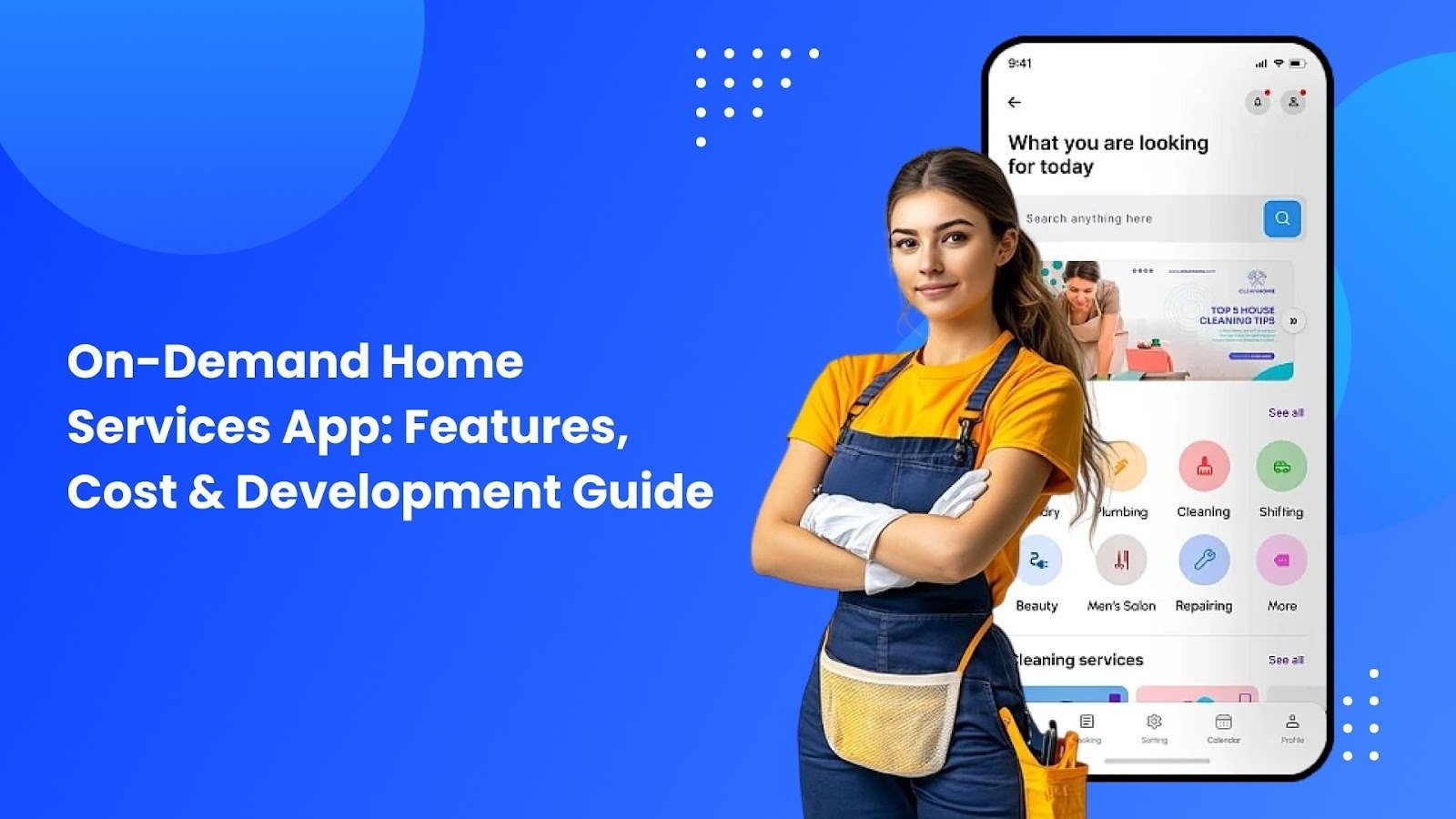
On-Demand Home Services App: Features, Cost & Development Guide
In today’s fast-paced digital economy, convenience is king. Consumers increasingly demand services delivered quickly, at their doorstep, and with reliable quality. This has given rise to the booming category of on-demand home services apps platforms that connect users with professionals who can address needs ranging from house cleaning to appliance repair, beauty services to plumbing. If you’ve ever used an App Like Urban Company, you know how transformative such platforms can be, making everyday tasks seamless and stress-free.
This article dives into everything you need to know about building an on-demand home services app the must-have features, the development cost, design considerations, revenue models, and how to choose the right home service app development company to bring your idea to life.
What is an On-Demand Home Services App?
An on-demand home services app is a mobile or web platform where users can book professionals for various household tasks. These services include:
- House cleaning and deep cleaning
- AC and appliance repair
- Electrician and plumbing
- Beauty and wellness at home
- Pest control
- Gardening and moving assistance
The app acts as a marketplace connecting customers with trained service providers, handling scheduling, payments, ratings, and more.
Apps like this transform how people manage chores turning hours of phone calls and uncertainty into a few taps on a smartphone.
See also: Best Flush Door Designs for Minimalist Homes
The Rise of On-Demand Home Service Market
The growth of this market has been explosive, driven by:
- Urbanization and busy lifestyles – People prioritize time and pay for convenience.
- Smartphones everywhere – Mobile penetration has made service search instantaneous.
- Trust through Ratings – Ratings and reviews give users confidence in service quality.
- Flexible work economy – Service professionals can choose gigs and schedules.
An App Like Urban Company has shown that users are willing to pay for verified service providers, transparent pricing, and cashless payments. This success inspires many startups and established businesses to enter this space.
Core Features of an On-Demand Home Services App
If you plan to build your own platform, here are the essential features it must include:
1. User App (Customer Interface)
The user app should be intuitive and hassle-free:
- User Registration & Login – Sign up via email, phone, or social media.
- Booking Dashboard – Users can select a service category and choose available slots.
- Service Selection – Filters for price, ratings, location, and availability.
- Real-Time Tracking – View service provider location and arrival time.
- Secure Payments – Multiple payment options including credit card, e-wallet, and COD.
- Ratings & Reviews – Feedback mechanism for transparency.
- Service History – Track past bookings and invoices.
- Notifications – Alerts for booking confirmation, reminders, and offers.
These features ensure users feel in control and can access services swiftly.
2. Provider App (Service Partner Interface)
Service professionals require tools to manage their schedules and work:
- Registration & Verification – Upload documents and credentials.
- Job Alerts – Instant notifications for new work requests.
- Accept/Reject Jobs – Flexibility to choose assignments.
- GPS Navigation – Turn-by-turn directions to customer locations.
- Earnings Dashboard – Daily/weekly earnings summary.
- Ratings & Performance – View client feedback to maintain standards.
The provider app must be designed for quick decision-making and ease of use.
3. Admin Panel (Control Center)
The backend dashboard is crucial for monitoring and optimization:
- User and Provider Management – Approve, deactivate, or manage accounts.
- Service Category Control – Add or update services and pricing tiers.
- Booking Analytics – Track bookings, revenue, and geographical insights.
- Payment Management – Monitor transactions and payouts.
- Promotions & Discounts – Create special offers for customers.
The admin panel ensures smooth operations and informed decision-making.
Advanced Features to Differentiate Your App
To stand out from competitors (including an App Like Urban Company), you can integrate advanced features:
1. AI-Powered Matching
Use machine learning to recommend service professionals based on user preferences, location, and history.
2. In-App Chat & Call
Allow users and providers to communicate without leaving the app.
3. Subscription Plans
Offer monthly subscriptions for regular services like weekly cleaning with discounted pricing.
4. Loyalty Rewards
Points for repeat bookings that can be redeemed for discounts.
5. Multilingual Support
Cater to diverse user bases by offering multiple languages.
6. Insurance & Safety Integrations
Provide insurance coverage for services, enhancing user trust.
These value-added features can significantly boost user engagement and retention.
Technology Stack for On-Demand Home Service Apps
Choosing the right technology stack guarantees performance, scalability, and security.
Frontend Development
- Mobile Platforms: React Native, Flutter (for cross-platform apps), or native languages (Swift for iOS, Kotlin for Android)
- Web Dashboard: Angular, React, or Vue.js
Backend Development
- Server: Node.js or Python (Django/Flask)
- Database: MongoDB, MySQL, or PostgreSQL
- Real-Time Features: Firebase, WebSockets
APIs & Integrations
- Payment Gateways: Stripe, Razorpay, PayPal
- Maps & GPS: Google Maps API
- Push Notifications: Firebase Cloud Messaging
A capable home service app development company will recommend a custom stack based on your goals, budget, and scalability requirements.
Development Cost: What to Expect
The cost of developing an on-demand home services app varies based on several factors:
1. App Complexity
- Basic MVP – Core features with simple UI: $5,000 – $8,000
- Moderate App – With advanced filters, payment integration: $10,000 – $15,000
- Full-Featured App – AI features, chat, analytics: $15,000+
2. Platform Choice
- Developing for iOS + Android will cost more than a single platform.
- Cross-platform frameworks can reduce costs.
3. Design and UX
Custom animations, branding, and polished UI add to the budget but deliver higher engagement.
4. Third-Party Integrations
Payments, mapping, and cloud services often involve subscription fees or API costs.
5. Development Partner’s Location
Rates differ across the world:
- North America / Western Europe: higher rates
- Eastern Europe / Latin America / South Asia: competitive pricing
A reliable home service app development company will provide a transparent cost breakdown and help you prioritize features for your budget.
Steps to Build Your On-Demand Home Services App
1. Market Research & Validation
Before building, make sure there’s demand in your target region. Analyze competitors, user pain points, and regional preferences.
2. Define Your USP (Unique Selling Proposition)
What will make your app different from others like Urban Company? It could be lower pricing, insurance coverage, niche services, or faster response time.
3. Create a Feature List & Wireframes
Work with designers to sketch user flows and app screens. This helps estimate time and budget.
4. Choose a Development Partner
Opt for a company with proven experience in marketplace apps. Look at portfolios, client reviews, and post-launch service quality.
5. Development & Iteration
Develop in phases — starting with a Minimum Viable Product (MVP) to test core features before scaling.
6. QA & Testing
Rigorous testing ensures bug-free performance across devices.
7. Launch & Marketing
Deploy on App Store and Play Store, and run targeted marketing campaigns to attract early users.
8. Collect Feedback & Scale
User feedback is gold — use it to refine features, expand service categories, and improve provider experience.
Revenue Models for On-Demand Home Service Apps
Generating revenue is a key measure of your app’s success. Common monetization strategies include:
1. Commission Model
Take a percentage fee from each booking completed through the app. This is the most popular model.
2. Service Provider Subscription
Charge professionals a monthly fee for premium listing or leads.
3. Featured Listings & Ads
Providers can pay for better visibility on search results.
4. Cancellation Fees
Charge users a nominal fee for last-minute cancellations.
5. Priority Booking Fees
Users pay extra for immediate or same-day services.
With multiple revenue streams, your business becomes more resilient and profitable.
How to Choose the Right Development Partner
Selecting a trustworthy home service app development company can make or break your project. Here’s what to consider:
1. Experience & Portfolio
Look for companies with marketplace or service app experience. Ask for case studies and live app examples.
2. Understanding of On-Demand Economy
The partner should know user psychology, provider workflows, and booking behavior.
3. Transparent Communication
Clear timelines, milestones, and reporting are critical.
4. Post-Launch Support
Ensure they offer maintenance, updates, and monitoring after launch.
5. Technology Expertise
The partner must be skilled across frontend, backend, cloud, and integrations.
If you’re looking to create a competitive platform similar to an App Like Urban Company, partnering with an experienced development team will accelerate your success.
Conclusion: Your Blueprint to Success
The on-demand home services market is thriving — driven by convenience, digital adoption, and evolving lifestyles. Building an app in this space requires careful planning, the right features, smart technology choices, and a partner who understands the domain.
From defining your unique value to budgeting for development and executing a successful launch, every step matters. Use this guide as your blueprint and leverage expert insights to deliver a platform that customers trust and professionals rely on.
Whether your goal is to build a scalable MVP or a full-feature service marketplace, the opportunity is ripe — and success favors those who execute with clarity and precision.