
From Sensors to Insights: Inside a Modern Critical Asset Monitoring Solution
Industrial operations depend on equipment that cannot afford unexpected failure. Power systems, compressors, turbines, and production lines often operate continuously under load. When a single component fails, downtime can cascade across entire facilities. For this reason, asset reliability has shifted from reactive repair to proactive monitoring.
A modern critical asset monitoring solution does more than collect raw sensor data. It transforms operational signals into actionable insight, allowing engineering teams to detect anomalies before they escalate into unplanned outages.
Understanding how these systems function—from sensor deployment to decision-making dashboards—clarifies why they have become foundational to industrial reliability strategies.
Sensor Layer: Capturing Operational Signals
At the foundation of every critical asset monitoring solution is a network of sensors. These devices measure physical parameters directly from equipment surfaces or internal systems.
Common sensor types include:
- Vibration sensors for rotating machinery
- Temperature sensors for bearing and motor health
- Pressure transducers for hydraulic systems
- Electrical current sensors for load monitoring
Each sensor captures a specific dimension of machine behavior. The accuracy and placement of these devices determine the reliability of the data collected.
Why Sensor Placement Matters
Improper sensor positioning can distort readings or miss early warning signs. For example, vibration sensors placed away from bearing housings may fail to detect early-stage imbalance.
Engineering calibration ensures that data reflects actual equipment conditions rather than environmental noise.
Data Transmission and Edge Processing
Once sensors capture data, it must be transmitted securely to processing systems. Modern monitoring platforms often rely on edge devices to perform preliminary filtering before data reaches central systems.
Edge processing supports:
- Noise reduction
- Immediate threshold-based alerts
- Reduced bandwidth usage
By processing information close to the source, organizations minimize latency and improve responsiveness.
The International Organization for Standardization has emphasized structured data management and system interoperability as key components of industrial automation frameworks. Effective monitoring solutions align with these broader reliability standards.
See also: Powering Industrial Progress with Advanced Motor Technology
Data Aggregation and Storage
After transmission, sensor outputs are aggregated into centralized platforms. This may occur within on-site servers or cloud-based environments.
Aggregation enables:
- Historical trend analysis
- Cross-asset performance comparison
- Long-term condition tracking
Raw data alone does not provide actionable insight. Structured storage allows pattern recognition over time.
Analytics Engine: Turning Data Into Meaning
The analytics layer distinguishes modern systems from earlier monitoring approaches. Instead of relying solely on fixed alarm thresholds, advanced platforms analyze patterns and deviations.
Analytics capabilities may include:
- Baseline behavior modeling
- Anomaly detection algorithms
- Predictive failure indicators
When vibration amplitude deviates from historical norms, the system flags potential imbalance before mechanical failure occurs.
This transition from reactive alarms to predictive intelligence defines the evolution of asset monitoring.
Visualization and Decision Support
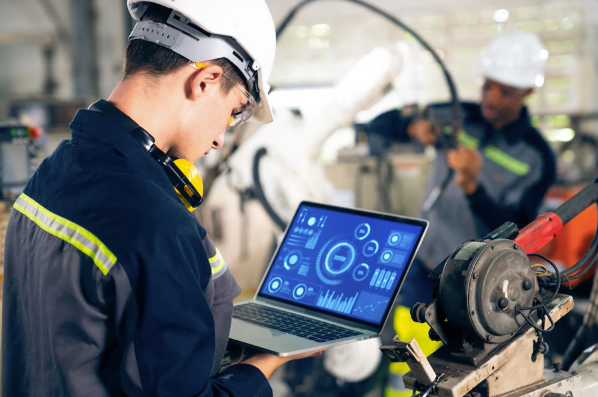
Collected data and analytical insights must be accessible to operations teams. Dashboards translate complex readings into visual indicators that guide action.
Effective visualization supports:
- Real-time health scoring
- Trendline tracking
- Maintenance scheduling recommendations
Clear visual representation ensures that engineering teams can interpret system status without navigating raw datasets.
Integration With Maintenance Workflows
A comprehensive critical asset monitoring solution integrates directly with maintenance management systems.
Integration enables:
- Automated work order generation
- Prioritized intervention scheduling
- Documentation of corrective actions
Instead of relying on routine inspection intervals alone, maintenance becomes condition-driven.
Risk Mitigation and Operational Stability
The ultimate goal of monitoring is reducing risk. Early detection prevents secondary damage, protects production schedules, and stabilizes cost planning.
Key operational outcomes include:
- Reduced unplanned downtime
- Lower emergency repair costs
- Improved asset lifespan
Continuous monitoring transforms reliability from a reactive discipline into a predictive strategy.
Security and Data Governance
As monitoring platforms rely on connected devices, cybersecurity becomes essential. Secure data transmission and access control prevent unauthorized interference.
Structured governance ensures that monitoring data remains:
- Confidential
- Accurate
- Available for audit purposes
Protecting system integrity is as important as capturing accurate sensor readings.
The Shift Toward Intelligent Infrastructure
Modern industrial environments increasingly depend on interconnected systems. Monitoring platforms serve as foundational infrastructure supporting digital transformation.
A structured critical asset monitoring solution integrates sensing technology, analytics, visualization, and workflow automation into a unified reliability framework.
As facilities adopt more automated processes, monitoring systems will continue evolving toward deeper predictive modeling and autonomous response mechanisms.
Conclusion
From sensor deployment to analytics and visualization, a modern critical asset monitoring solution represents a layered approach to industrial reliability. It begins with accurate data capture, progresses through structured processing and analysis, and culminates in informed maintenance action.
By transforming operational signals into predictive insights, organizations reduce downtime risk and improve long-term equipment stability. As industries move toward increasingly data-driven operations, integrated monitoring systems will remain central to safeguarding critical infrastructure and sustaining performance under continuous demand.