
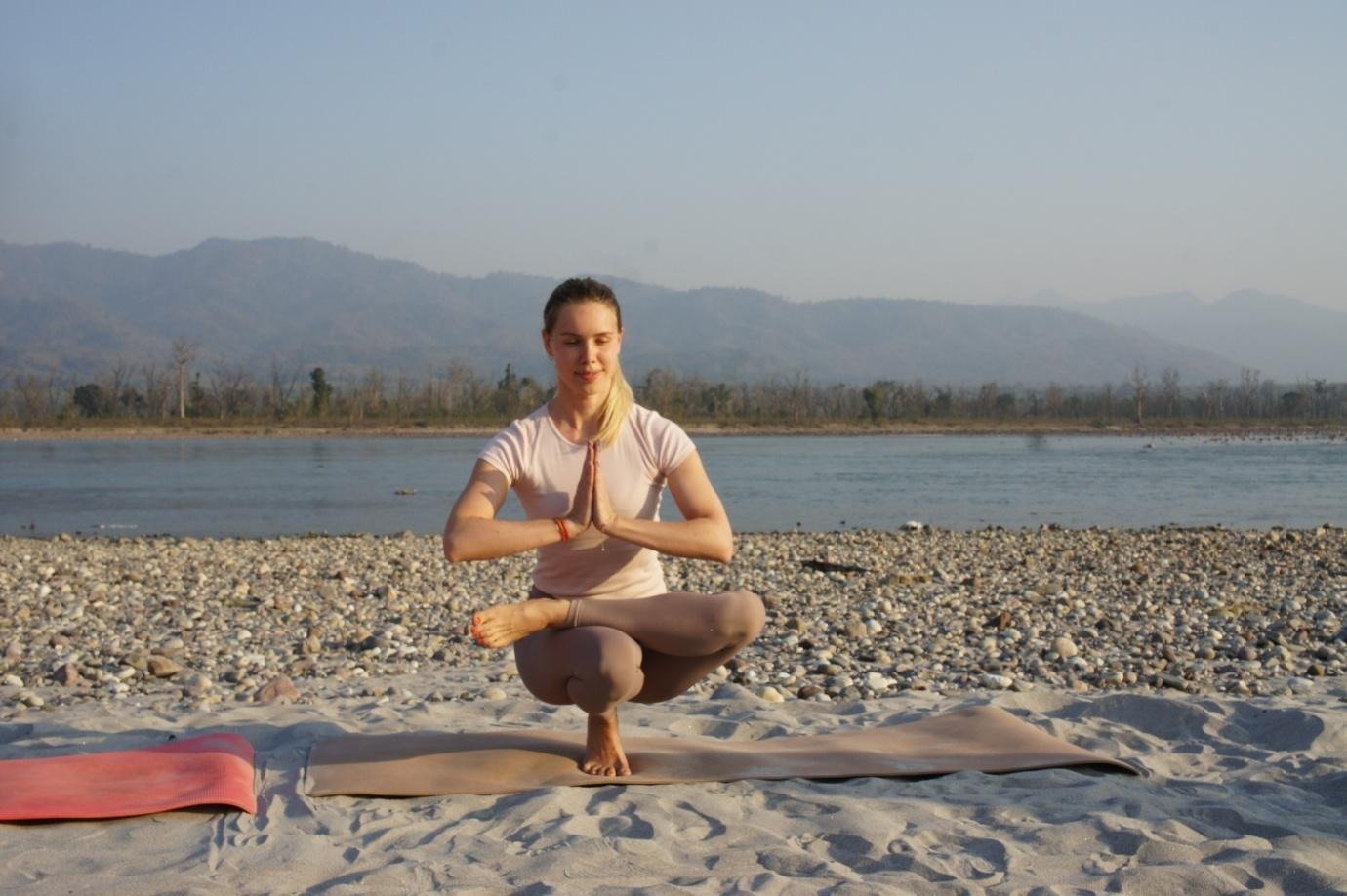
Traditional Yoga vs Modern Yoga: Understanding the Difference
Walk into any yoga studio today and you might encounter a heated room, a curated playlist, and a sequence engineered for maximum calorie burn. Walk into a traditional ashram in the foothills of the Himalayas and you will find silence, stillness, chanting at dawn, and a teacher who may not demonstrate a single posture for weeks.
Both experiences carry the name “yoga.” But they are describing something fundamentally different.
This is not a debate about which is better. It is an honest examination of what each tradition actually offers — and why understanding the difference matters enormously if you are serious about where your practice takes you.
What Is Traditional Yoga?
Traditional yoga is a holistic system of human development rooted in the Indian subcontinent and codified over several thousand years. Its oldest references appear in the Rigveda (approximately 1500 BCE), and its most systematic philosophical articulation is found in Patanjali’s Yoga Sutras, composed somewhere between 400 BCE and 400 CE.
In the traditional understanding, yoga is not primarily a physical practice. It is a complete path — ethical, psychological, physical, and spiritual — aimed at the reduction of mental suffering and the expansion of human awareness. The word itself derives from the Sanskrit root yuj, meaning to yoke or unite. What is being united is the individual self with a larger, unconditioned state of awareness.
The classical framework of traditional yoga includes eight interconnected limbs, described by Patanjali as Ashtanga (the eight-limbed path):
Yama — ethical restraints governing how we relate to others (non-violence, truthfulness, non-stealing, continence, non-possessiveness)
Niyama — internal disciplines governing how we relate to ourselves (cleanliness, contentment, self-discipline, self-study, surrender to a higher principle)
Asana — steady, comfortable posture; in Patanjali’s original text, this limb receives just three sutras out of 196
Pranayama — conscious regulation of the breath and life-force energy
Pratyahara — withdrawal of the senses from external objects
Dharana — focused concentration
Dhyana — sustained, uninterrupted meditation
Samadhi — a state of profound absorption and integration
Notice that physical postures represent one-eighth of the classical system. In traditional yoga, asana practice was preparation for meditation — a means of making the body stable and the nervous system quiet enough to sit in prolonged stillness. The goal was not a flexible spine but a clear mind.
What Is Modern Yoga?
Modern yoga — the form most people encounter in gyms, studios, and apps today — emerged primarily in the late 19th and early 20th centuries through a complex cultural exchange between Indian reformers, European physical culture movements, and Western wellness trends.
Figures like Swami Vivekananda, Krishnamacharya, and later B.K.S. Iyengar and Pattabhi Jois played pivotal roles in adapting yoga for contemporary audiences. Their motivations varied: some sought to present yoga as a universal spiritual path, others to demonstrate that Indian physical culture could stand alongside Western gymnastics, others still to develop therapeutic applications for the body.
What emerged from this period is a predominantly asana-based practice, heavily influenced by Swedish gymnastics, British military calisthenics, and Indian wrestling traditions — synthesized into the flowing sequences we recognize today as Vinyasa, Ashtanga, Iyengar, Hot Yoga, and their countless derivatives.
Modern yoga excels at what it was partly designed to do: make the body stronger and more flexible, reduce stress hormones, improve posture, and provide community. These are genuine, evidence-backed benefits that millions of people experience every year.
What modern yoga often does not provide — and rarely claims to — is the full philosophical and psychological architecture that gives the original system its depth.
The Five Core Differences
1. Purpose and Goal
In traditional yoga, the ultimate goal is chitta vritti nirodha — the stilling of the fluctuations of the mind (Yoga Sutras 1.2). Physical health is a byproduct, not the destination. The practitioner is working toward a fundamental shift in how consciousness operates, moving from identification with the contents of the mind to awareness of awareness itself.
In modern yoga, the stated goals are typically physical and emotional: flexibility, strength, stress relief, better sleep, injury recovery, or general wellness. These are entirely legitimate goals. But they represent the outermost layers of what the original system was designed to address.
This difference in purpose shapes everything — the curriculum, the teacher’s role, the pace of progression, and what success looks like.
2. The Role of the Teacher
Traditional yoga operated through the Guru-Shishya (teacher-student) relationship — one of the most carefully structured mentoring systems in human history. A student would live with or study closely under a single teacher for years, sometimes decades, absorbing not just techniques but an entire way of perceiving the world. The teacher’s role was not to deliver information but to catalyze transformation in a student they knew deeply and personally.
This model required enormous commitment from both parties. The teacher accepted full responsibility for the student’s development. The student offered full trust and sustained effort. Over time, the relationship became the vehicle for transmission — not just of knowledge but of the teacher’s own realized understanding.
Modern yoga teachers, even excellent ones, typically relate to students in a far more transactional way. A teacher may instruct dozens of students in a single class, knowing none of them intimately. Certifications are earned in weeks or months rather than years of close personal study. This is not a criticism — it is simply a different model suited to a different cultural context.
3. The Place of the Body
Perhaps the most significant and widely misunderstood difference between the two approaches is how the physical body is positioned within the larger practice.
In modern yoga, the body is often the curriculum. Asana sequences are designed, refined, and marketed based on their physical effects — spinal mobility, hip opening, core strength, cardiovascular fitness. Progress is measured in terms of postures achieved: deeper backbends, unassisted inversions, split poses.
In traditional yoga, the body is a gateway. Asana practice makes the body a cooperative instrument for deeper work. A practitioner who can sit comfortably in stillness for an hour has accomplished something significant — regardless of whether they can perform a handstand. The physical practice is respected and taken seriously, but it is always in service of something that transcends it.
This reframing changes the entire relationship with the body — from something to be performed with to something to be listened to.
4. Philosophy and Text Study
Traditional yoga is inseparable from a rich intellectual tradition. Practitioners were expected to study primary texts — the Yoga Sutras, the Bhagavad Gita, the Upanishads, the Hatha Yoga Pradipika, the Shiva Samhita — not as historical curiosities but as living guides to practice. Philosophy was not supplementary to yoga; it was its bones.
Understanding concepts like prakriti and purusha (matter and consciousness), gunas (the three qualities of nature), karma, samsara, and moksha was considered foundational to practicing yoga at any serious level.
Modern yoga rarely includes this depth of philosophical study. A standard 200-hour teacher training may include a brief introduction to the Yoga Sutras and a survey of Sanskrit terminology. But the lived engagement with these texts — the kind that comes from years of study with a qualified teacher — is largely absent from mainstream yoga education.
5. Lifestyle and Integration
Traditional yoga was not a class you attended. It was a way of life. The Yamas and Niyamas — the ethical foundations of the system — governed how practitioners ate, spoke, worked, related to others, and moved through the world. Yoga practice was meant to be visible not on a mat but in the quality of one’s relationships, the consistency of one’s character, and the steadiness of one’s mind under pressure.
Modern yoga, appropriately for its cultural context, tends to be compartmentalized. Practice happens for sixty or ninety minutes, and then life continues. This is not necessarily a failure — it is a reflection of how contemporary life is organized. But practitioners who wonder why their yoga practice has not changed their stress response, their relationships, or their sense of purpose often find the answer here: the practice has not yet touched the rest of life.
See also: Common Digital Marketing Mistakes That Hurt Business Growth
The Question of Authenticity
A conversation about traditional versus modern yoga inevitably raises the question of authenticity — and this is where clarity is important.
Yoga has always evolved. What we call “traditional” yoga today represents a specific historical snapshot of a system that was itself the product of centuries of development, synthesis, and debate. The physical practices codified in the Hatha Yoga Pradipika (14th century CE) would have looked quite different from the yoga practiced at the time of Patanjali. Even Krishnamacharya, widely considered the father of modern yoga, adapted his teaching radically depending on the student in front of him.
So “traditional” does not mean unchanged or pure. It means rooted — connected to the philosophical framework, ethical structure, and transmission lineage that gives the practices their depth and their reason for existing.
The legitimate concern about modern yoga is not that it has adapted. It is when adaptation becomes disconnection — when practices are extracted from their context so completely that the words “yoga” and “fitness class” become interchangeable. When that happens, something genuinely valuable is lost.
Why This Distinction Matters for Students Today
For a practitioner who attends weekly yoga classes for physical wellbeing and stress relief, the traditional-versus-modern distinction may be interesting but not urgent. The practice is doing what they need it to do.
For a practitioner who senses that there is more — who feels the edges of what contemporary yoga offers and wants to go deeper — understanding this distinction becomes essential. It shapes where you study, who you study with, and what you are actually looking for.
This is one reason why serious students increasingly seek out immersive study experiences rooted in the classical tradition. Yoga in India remains the most direct access point to that living lineage — not as a romantic pilgrimage but as a practical educational choice. When you study in the country where these systems were developed and where the intellectual and spiritual traditions remain most intact, the learning carries a different quality.
Students who pursue advanced training — including those enrolled in a 300 hour yoga teacher training in India — frequently report that the most transformative aspect of their program was not the asana refinement or the teaching methodology but the encounter with yoga’s philosophical depth. For many, it is the first time the practice has been presented as a complete system rather than a sequence of postures.
Can the Two Coexist?
Yes — and in the most honest sense, they must.
The best contemporary yoga teachers are those who bring both dimensions into their work. They understand anatomy and alignment, they can teach an accessible, well-sequenced class, they know how to work with beginners and with injuries. And they also carry philosophical depth, ethical seriousness, and an experiential understanding of what the practice is ultimately for.
The traditions are not at war. Modern yoga has made an ancient system accessible to hundreds of millions of people who would otherwise never have encountered it. That is a genuine gift. The opportunity — and the responsibility — is to ensure that accessibility does not become shallowness; that the door opened by a good yoga class leads somewhere worth going.
A Practitioner’s Reflection
Here is a useful question to sit with: What do you actually want from yoga?
If the answer is physical fitness, stress reduction, and community — modern yoga delivers those things reliably and beautifully. There is no need to complicate it.
If the answer includes psychological freedom, philosophical understanding, the taming of the reactive mind, or a systematic approach to what the ancient texts call liberation — then the modern form, on its own, will eventually feel insufficient. Not because it fails on its own terms, but because it was not designed to go where you want to go.
Both answers are valid. The important thing is to know which question you are asking — and to seek out the form of practice that is genuinely equipped to answer it.
Summary: Key Differences at a Glance
| Dimension | Traditional Yoga | Modern Yoga |
|---|---|---|
| Primary Goal | Liberation, stilling the mind | Physical health, stress relief |
| Core Focus | Eight-limbed path (Ashtanga) | Asana (physical postures) |
| Teacher Role | Long-term mentor and guide | Class instructor |
| Philosophy | Central and essential | Supplementary or absent |
| Lifestyle | Integrated way of living | Scheduled practice session |
| Lineage | Guru-Shishya transmission | Certified training programs |
| Timeline | Years to decades | Weeks to ongoing classes |
Conclusion
Traditional yoga and modern yoga are not opposites. They are different expressions of the same root system, shaped by different eras, different needs, and different audiences. Understanding how they differ is not an academic exercise — it is the first step toward choosing the practice and the path that genuinely serves where you are going.
The ancient system remains available. Its texts are still studied. Its teachers still exist. And for those who are drawn to the depth it offers, the path into it — though slower and more demanding than a drop-in class — is one of the most rewarding journeys a human being can take.