
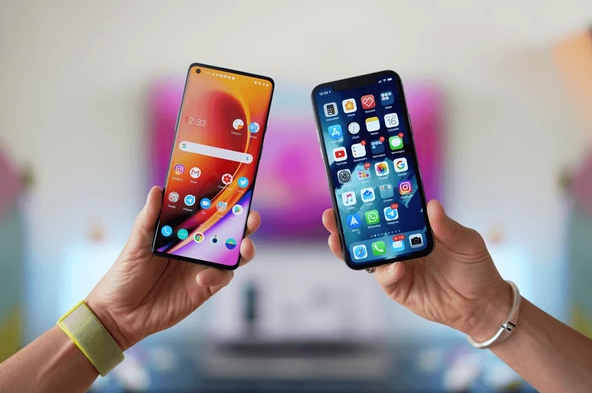
Key Differences Between Android and iOS App Development Approaches
Understanding Android and iOS app development approaches is vital for business success, representing vastly different audience bases, devices, and ecosystems.
Key Takeaways:
- Android’s open-source system has a huge global reach across many brands, and iOS is a closed, premium network for high-spending users
- Android uses Java or Kotlin and requires heavy testing across many different devices; iOS uses Swift or Objective-C and has a much simpler testing process
- Android apps take longer to launch because they need optimization for multiple hardware types, and iOS apps launch faster because they target a single, uniform device set
To launch a successful app, teams must adopt strategic guardrails. First, conduct early user research via surveys and competitor reviews to identify user gaps. Next, define a rigid project scope to prevent time-wasting creep.
Finally, ensure scalability and implement comprehensive testing frameworks early to prevent crashes during sudden traffic spikes.
Understand the key differences between Android and iOS app development in the UK, from languages and UI guidelines to testing and launch.
See also: Unlocking Molecular Insights with Advanced Fluorescence Techniques
Why the Platform Choice Defines Your Development Approach
Android and iOS are built on entirely different technical foundations, and each platform has its own design language. Store rules and user expectations are different for every platform as well.
Choosing the wrong approach increases cost, delays launch, and affects the UX negatively.
8 Differences Between Android and iOS App Development Approaches
Here are the key differences between Android and iOS App development approaches that UK businesses need to consider before making a platform choice, a major decision-
Key difference 1- Programming languages and development environment
Both Android and iOS app development in the UK require separate toolchains and codebases.
Android:
- Primary language- Kotlin (modern) or Java (legacy)
- IDE- Android Studio
- Build system- Gradle
iOS:
- Primary language- Swift (modern) or Objective-C (legacy)
- IDE- Xcode (Mac only)
- Build system- Apple’s native toolchain
Key difference 2- UI and Design Guidelines
The same app must be redesigned to feel native on each platform due to differences in the UI.
Android:
- Follows the Material Design system by Google
- Flexible, highly customizable layouts
- Back button navigation is standard
iOS:
- Follows Human Interface Guidelines (HIG) by Apple
- Cleaner, more restrictive design rules
- Gesture-based navigation (no back button)
Android follows material design principles with flexible customization, while iOS adheres to the Human Interface Guidelines of Apple.
Key difference 3- Device Fragmentation and Screen Sizes
Android:
- Thousands of device models across brands
- Multiple screen sizes, resolutions, and OS versions
- An extensive testing matrix is required
iOS:
- Limited and controlled in Apple devices
- Fewer screen sizes and OS versions to support
- More predictable testing environment
Note: Android app development in the UK requires testing across various devices and OS combinations due to high fragmentation.
Key difference 4- App Store Submission and Approval
iOS app development in the UK undergoes a stricter Apple App Store review process than the automated initial screening found on Google Play.
Android:
- The review process typically requires hours to a few days
- More open submission policy
- Faster iteration and update cycles
iOS:
- Review process requires 1-3 days on average
- Strict Apple review guidelines
- Rejects are more common and require more careful compliance
Key difference 5- Monetization Models
iOS users in the UK typically generate higher revenue per user than Android users. This makes iOS app development the preferred first-launch platform for premium and subscription-based applications.
Android:
- Stronger in emerging markets
- Ad-based monetization performs well
- In-app purchases are growing rapidly
iOS:
- Higher average revenue per user (ARPU)
- Users are more likely to pay for apps and subscriptions
- Preferred platform for premium app launches in the UK
Key difference 6- Performance and Hardware Access
Android:
- More open access to device hardware
- Broader Bluetooth, NFC, and file system access
- Greater flexibility for custom integrations
iOS:
- Tightly controlled hardware access
- Optimized performance due to Apple’s unified ecosystem
- Superior battery and memory management
Android offers a broader scope for app development and hardware access for custom integrations, while iOS delivers tighter performance optimization due to Apple’s full control over hardware and software.
| Factor | Android App Development UK | iOS App Development UK |
| Codebase | Java/Kotlin | Swift/Objective-C |
| Device Testing | Extensive (high fragmentation across brands) | Streamlined (fewer device models) |
| App Store Approval | Faster | Stricter, slightly longer review process |
| Time to Market | Slightly longer due to testing | Faster for a single device set |
| Target Audience | Broader global reach | Higher-spending UK users |
| Average Development Cost | Moderate to High | Moderate to High |
Table: Key Differences in iOS and Android App Development
Key Tip: To capture UK buyers and signal local relevance to search engines, weave in localized tech and market realities. Apps must natively integrate contactless mobile wallets (Apple/Google Pay) to capture the 50% of British consumers now defaulting to mobile payments. Furthermore, codebases must strictly enforce security architectures compliant with the Data Protection Act 2018 (UK-GDPR).
Android commands over 72% of the global market. The UK is an iOS-dominant ecosystem where Apple holds 49% of the mobile market share.
Consider the selection of app development on the following bases-
- Choose iOS if your application targets high-ARPU UK demographics, FinTech platforms, or subscription-reliant business models
- Prioritize Android if you are targeting broader enterprise demographics or expanding into highly fragmented global markets
Cross-platform frameworks like Flutter and React Native allow businesses to target both Android and iOS from a single codebase, reducing cost and time-to-market without fully sacrificing native performance.
To Summarize
Android and iOS app development differ primarily in ecosystem, programming languages, and device variety. Android app development in the UK uses Kotlin or Java in Android Studio. iOS app development in the UK uses Swift or Objective-C exclusively in Xcode.
Android is open-source with broad hardware diversity, requiring more testing but offering a wider global reach.
Capture UK Market Share By Deploying A Custom Android and iOS App
Stand out in the highly digitized UK market by offering frictionless, on-the-go access to your services. Launch an app to secure a dedicated customer base, increase mobile engagement, and drive higher ROI. Build securely for both major app stores to reach a wider audience!