Best Textured Wall Art for Modern Offices: Abstract Paintings That Transform Workspaces
Modern office environments benefit dramatically from thoughtful art selection that enhances aesthetics while promoting productivity and professional atmosphere. Textured wall art—abstract paintings featuring dimensional surfaces, layered paint applications, and tactile visual qualities—elevates workspace design beyond conventional office décor, creating environments that inspire creativity while maintaining professional sophistication.
Strategic artwork selection transforms sterile corporate spaces into visually engaging, personality-filled environments where employees and clients alike experience enhanced spatial quality. A Textured Wall Art for Modern Offices – Abstract Paintings approach combines visual sophistication with functional benefits, creating professional environments that balance aesthetic appeal with workplace objectives.
The Impact of Workplace Art on Office Environment
Office spaces significantly influence employee satisfaction, productivity, and client perception. Visual environment quality directly affects how people experience professional spaces, influencing mood, focus, and overall workplace satisfaction.
Psychological Benefits of Workplace Art
Research consistently demonstrates that thoughtfully curated artwork improves workplace environments. Visual stimulation promotes cognitive engagement, reducing monotony-induced fatigue. Aesthetically pleasing environments lower stress levels, supporting mental wellbeing during demanding workdays. Quality artwork creates visual interest that encourages mental breaks, refreshing focus during extended work periods.
Professional Impression Creation
Client-facing spaces benefit enormously from quality artwork, communicating professionalism, sophistication, and attention to detail. First impressions shaped by office aesthetics influence client perception of company quality and values. Strategic art selection signals investment in quality and professional standards.
Employee Morale and Retention
Attractive work environments increase employee satisfaction and retention. Spaces demonstrating investment in quality and aesthetics convey respect for employee experience. Personalized, visually engaging offices create pride in workplace identity.
Understanding Textured Wall Art
Textured artwork differs fundamentally from flat-surface paintings, offering dimensional qualities that engage viewers physically and visually.
What Constitutes Textured Wall Art
Textured paintings feature dimensional surfaces created through varied application techniques. Heavy paint application (impasto), collage elements, mixed media integration, and relief surfaces create tactile visual experiences. Unlike smooth painted surfaces, textured work invites closer examination, rewarding visual exploration with discovered details.
Creating Texture in Abstract Painting
Contemporary artists employ diverse techniques generating texture. Palette knife application creates directional mark-making visible from varied viewing angles. Layered paint application builds dimensional surfaces through accumulated pigment. Sand, gesso, and material integration introduces actual texture variation. Scraping, scratching, and gestural mark-making create surface variations that catch light differently depending on viewing position and lighting conditions.
Visual and Tactile Appeal
Textured paintings engage multiple sensory systems. Visual texture creates visual interest through light and shadow play across surfaces. The appearance of tactility—the visual suggestion of touchable surfaces—engages viewers even without physical contact. This multisensory engagement creates stronger visual impact than smooth surface paintings.
Selecting Textured Art for Professional Spaces
Successful office artwork requires careful consideration of professional context, spatial characteristics, and design objectives.
Color Palette Considerations
Professional settings benefit from sophisticated color approaches. Neutral base colors—grays, blacks, whites, beiges—provide versatility, complementing existing office palettes. Accent colors strategically introduce visual interest without overwhelming professional environments. Earth tones—browns, taupes, ochres—create warmth while maintaining professionalism. Cool accent colors—teals, navy, deep blues—add sophistication without excessive vibrancy.
Avoid aggressively bright or saturated colors unsuitable for professional spaces. Balance visual interest with workplace functionality, ensuring artwork enhances rather than distracts from work activities.
Scale and Spatial Relationships
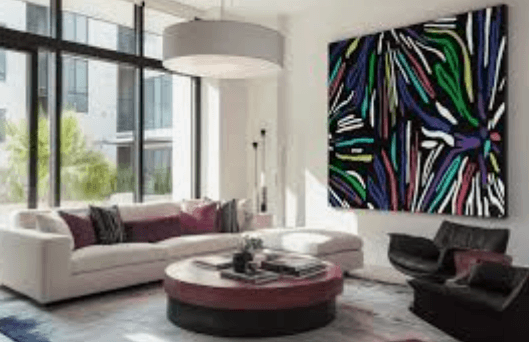
Large-scale textured paintings create dramatic focal points in executive offices, conference rooms, and client-facing spaces. Substantial artworks command attention, establishing professional presence through visual authority. Medium-scale works function effectively in individual offices, promoting visual interest without overwhelming personal workspaces.
Multiple smaller textured pieces arranged cohesively create gallery effects, adding visual complexity through collective impact. Smaller works suit hallways, waiting areas, and transitional spaces.
Abstract vs. Representational Approaches
Abstract textured art suits professional environments particularly well, avoiding potentially distracting subject matter while maintaining visual sophistication. Abstract paintings communicate through formal qualities—color, form, composition—rather than representational content, allowing diverse interpretations without explicit messaging.
Non-representational artwork accommodates diverse workplace perspectives, avoiding potential controversial associations while maintaining visual distinction and professionalism.
Styles of Textured Paintings for Office Spaces
Contemporary Minimalist Texture
Minimalist textured work employs limited color palettes and simplified compositions, creating sophisticated visual effects through restraint. Monochromatic or near-monochromatic pieces with subtle texture variation create elegant, refined aesthetics. Minimalist approach suits corporate offices emphasizing clean, contemporary design.
Gestural Abstract Expressionism
Energetic mark-making and expressive paint application create dynamic textured surfaces suggesting movement and vitality. Gestural abstraction communicates creativity and innovation, suiting creative industry offices and spaces emphasizing dynamic energy.
Layered Mixed Media Texture
Integration of multiple materials—paint, collage, mixed media—creates complex visual surfaces. Layered work invites exploration, rewarding close examination with discovered details. Mixed media approaches suit offices emphasizing innovation and unconventional thinking.
Subtle Metallic Integration
Incorporating metallic paints, foils, or reflective elements creates surfaces that shift visually depending on lighting and viewing angles. Metallic accents add sophistication and luxury, suiting high-end professional spaces while maintaining subtle restraint.
Organic Biomorphic Texture
Nature-inspired forms with textured surfaces suggest organic growth while maintaining abstract aesthetic. Biomorphic texture appeals to environmentally conscious offices and creative industries, creating visual connection to natural processes.
Textured Art in Different Office Spaces
Executive Offices and Conference Rooms
Large-scale textured paintings establish authority and sophistication in high-level professional spaces. Executive offices benefit from substantial artworks commanding attention and conveying professional distinction. Conference rooms gain visual impact from large textured works creating impressive visual environments for client meetings and strategic discussions.
Individual Workstations and Offices
Medium-scale textured paintings suit personal workspaces, providing visual interest and personality without overwhelming compact areas. Individual office art selection can reflect personal aesthetic preferences within professional parameters, supporting creative expression and workplace satisfaction.
Waiting Areas and Reception Spaces
Client-facing spaces benefit from quality artwork creating positive first impressions. Textured paintings in reception areas communicate professionalism and attention to detail. Client-interaction spaces particularly benefit from sophisticated visual environments establishing company quality standards immediately.
Collaborative Spaces and Breakrooms
Creative visual environments in collaboration areas can inspire innovation and generate positive interaction atmospheres. Textured abstract art suits spaces encouraging creative thinking and collaborative problem-solving. Breakroom art promotes mental restoration and psychological wellbeing during work breaks.
Hallways and Transitional Areas
Gallery-style arrangements of coordinated textured pieces create visual interest throughout office spaces. Multiple artworks distributed along circulation paths maintain visual engagement, encouraging employees and visitors to appreciate artwork during movement through offices.
Color Psychology in Professional Office Settings
Neutral Foundations for Professional Credibility
Neutral-toned textured paintings establish professional credibility without risking inappropriate color associations. Grayscale and earth-tone textured work suits diverse professional industries from legal services to finance to technology.
Strategic Accent Color Usage
Limited accent colors introduce visual interest while maintaining professionalism. Single accent colors—navy, teal, charcoal—create sophisticated visual impact without overwhelming professional environments. Avoid multiple competing accent colors that create visual chaos.
Industry-Specific Color Considerations
Creative industries benefit from bolder color approaches and energetic compositions. Conservative industries—finance, law—often prefer restrained, sophisticated color palettes. Technology companies embrace contemporary aesthetics ranging from neutral minimalism to energetic abstraction.
Calming Color Strategies
Cool tones—blues and greens—promote calm and focus. Offices emphasizing concentration and stress reduction benefit from cool-toned textured work. Warm tones create inviting, approachable atmospheres suitable for client-facing spaces and collaborative environments.
See also: Maximizing Business Success Through Digital Marketing
Quality Considerations When Selecting Office Art
Material Durability and Maintenance
Office artworks experience different environmental conditions than home settings. UV-stable materials resist fading in well-lit professional environments. Durable surfaces withstand office conditions without deterioration. Protective framing with UV glass preserves artwork longevity in office environments.
Size Appropriateness for Space
Accurately measure wall spaces and furniture scale before selecting artwork. Oversized paintings overwhelm small offices. Undersized work disappears in substantial spaces. Appropriate sizing ensures artwork functions effectively within spatial contexts.
Professional Installation
Proper installation ensures artwork safety and visual optimization. Professional mounting prevents damage to both artwork and office walls. Strategic placement maximizes visual impact while ensuring workplace safety.
Budget Considerations
Quality office artwork ranges widely in price. Original paintings command premium prices reflecting artistic value and uniqueness. High-quality reproductions offer accessibility at reduced cost. Budget allocation should reflect artwork prominence and viewing frequency.
Investment Perspective on Office Artwork
Quality contemporary textured paintings demonstrate market appreciation as artists gain recognition and collector interest increases. Strategic acquisition of emerging artist textured work often yields stronger appreciation than established artist pieces. Bronze Sculptures for Modern Art Investment Review documents how quality contemporary artwork appreciates through growing institutional recognition and collector demand—principles equally applicable to quality textured painting acquisitions.
Office artworks function simultaneously as aesthetic investments and practical workplace enhancements, combining financial potential with operational benefits.
Creating Cohesive Office Art Programs
Thematic Consistency Across Spaces
Coordinated artwork throughout offices creates visual cohesion. Consistent color palettes, complementary styles, and unified aesthetic approaches establish professional identity across diverse spaces.
Balancing Individual and Collective Identity
While maintaining overall cohesion, allowing personality expression in individual spaces supports employee satisfaction and creative identity. Flexible art programs accommodate both company-wide branding and personal workspace customization.
Rotating and Evolving Collections
Periodic artwork updates maintain visual freshness and employee engagement. Rotating exhibitions featuring different artists or seasonal variations sustain visual interest over extended office occupancy periods.
Conclusion
Textured wall art transforms modern offices from functional workspaces into visually engaging, professionally sophisticated environments. Abstract textured paintings combine aesthetic appeal with psychological benefits, supporting productivity, morale, and professional impression.
Strategic selection of appropriately scaled, professionally cohesive textured artwork creates office environments reflecting organizational values while promoting employee satisfaction and client confidence. Quality textured paintings elevate workspace design, transforming ordinary offices into distinctive professional environments where visual excellence supports workplace objectives.
Invest in textured wall art that balances aesthetic sophistication with functional benefits, creating modern offices that inspire creativity, support productivity, and communicate professional excellence to employees and clients alike.