Subsea Technology in 2025: The Honest Breakdown of What’s Overhyped and What Actually Works
The offshore and underwater industries have never been short of bold claims. Every few years, a wave of announcements promises to transform how work gets done beneath the surface — new materials, new control systems, new approaches to inspection and intervention. Some of those claims eventually hold up. Many do not survive contact with real operational conditions.
In 2025, the industry finds itself at a point where investment cycles have matured, certain technologies have accumulated enough field hours to be evaluated honestly, and operators are under real pressure to separate what is genuinely reliable from what remains experimental. Budgets are tighter than promotional materials suggest. The tolerance for systems that perform well in controlled conditions but struggle in deep water, high-pressure environments, or long-duration deployments is lower than ever.
This is not a technology showcase. It is a grounded assessment of where subsea capability actually stands, what categories of equipment and methodology have earned operational trust, and where the gap between marketed potential and delivered performance remains significant.
What Subsea Technology Actually Covers in Practice
The term subsea technology is broad enough to mean almost anything, which is part of the problem when evaluating what works. In practical terms, it spans the systems, equipment, and methodologies used to operate, inspect, maintain, and intervene in underwater environments — from shallow coastal infrastructure to deep-water oil and gas installations, offshore wind foundations, scientific research equipment, and defence-related systems.
Understanding the scope matters because performance varies dramatically by application. What works reliably for pipeline inspection in relatively shallow water may behave very differently when deployed at depth, under sustained pressure, or in environments with strong currents and limited visibility. The phrase subsea technology covers such different operating contexts that any general claim about its maturity or readiness requires significant qualification.
For operators and engineers who need a grounded starting point for evaluating what is available, exploring the specifics of subsea technology across different application categories is more useful than treating the field as a single, unified discipline. The distinctions matter both for procurement decisions and for managing the risk profile of any given deployment.
The most reliable technologies in use today tend to share a few common characteristics: they have been refined through repeated field deployment rather than developed primarily in laboratory conditions, they have been designed with failure modes in mind rather than optimised purely for best-case performance, and they are supported by service infrastructure that extends beyond the initial sale.
The Role of Actuators and Subsurface Control Systems
Among the most consequential components in any subsea installation are the actuators and control systems that manage physical movement and mechanical response underwater. These systems govern valves, connections, and intervention tools — functions that directly affect whether a structure operates safely or requires costly intervention.
Actuator reliability in subsea conditions is genuinely difficult to achieve. The combination of sustained pressure, corrosive seawater, limited access for maintenance, and the need for precise mechanical response over extended periods places demands on materials and design that are not easily met. Systems that perform adequately during initial deployment can degrade in ways that are difficult to predict without extensive field data.
The industry has made measurable progress in this area over the past decade. Hydraulic actuator systems have been refined to operate with greater consistency across variable depth and temperature conditions. Electric actuator designs have advanced to a point where they are now considered viable in applications that were previously considered suitable only for hydraulic systems. However, the reliability case for electric systems in the most demanding deep-water environments is still being built, and operators should approach vendor claims in this space with appropriate scrutiny.
Where the Hype Has Outrun the Reality
Autonomous underwater vehicles represent perhaps the clearest example of a technology category where the gap between promotional narrative and operational reality remains significant. The core concept is sound: unmanned vehicles that can conduct inspection, survey, and intervention tasks without the cost and complexity of surface support vessels or human divers. The operational case is real. But the actual performance of many systems in commercial deployments has been inconsistent.
Navigation accuracy, battery endurance, communication reliability in deep or complex environments, and the ability to handle unplanned situations without human intervention all present challenges that have not been fully resolved. The vehicles that work reliably tend to do so within narrow operational envelopes. When conditions fall outside those parameters — whether due to currents, depth, equipment malfunction, or task complexity — the limitations become apparent quickly.
Artificial Intelligence and Predictive Maintenance Claims
The integration of artificial intelligence into subsea monitoring and predictive maintenance has generated considerable attention. The underlying idea — using sensor data and machine learning models to anticipate equipment failures before they occur — has genuine value in principle, and in some onshore industrial contexts it has demonstrated real benefits.
In subsea environments, the challenge is data quality and continuity. Sensor systems operating at depth in corrosive conditions generate data that is often incomplete, inconsistent, or interrupted. Training predictive models on that data produces results that are less reliable than those achieved in cleaner data environments. The models also require ongoing validation against real failure events, which in subsea contexts are infrequent enough that building a statistically meaningful dataset takes years.
This does not mean the approach has no value. It means that operators who have invested in AI-based monitoring based on vendor projections are often finding that the systems require substantially more manual oversight and data management than was suggested during procurement. The technology is developing, but the maturity claims frequently exceed the delivered capability.
Digital Twin Technology in Subsea Contexts
Digital twin frameworks — virtual models of physical infrastructure that are continuously updated with real-world data — have been widely discussed as a transformational tool for subsea asset management. The value proposition is clear: better visibility into the condition of structures and systems that are expensive and difficult to access physically.
In practice, the quality of a digital twin is entirely dependent on the quality and completeness of the data feeding it. For subsea assets, achieving that data quality requires sensor coverage, communication infrastructure, and data management processes that represent a significant investment in themselves. Many operators have found that their digital twin implementations are more useful as planning and visualisation tools than as real-time operational systems, because the data inputs are not reliable or continuous enough to support the latter function.
See also: Maximizing Business Success Through Digital Marketing
Technologies That Have Earned Operational Trust
Not all of the progress in this field has been overstated. Several categories of subsea equipment and methodology have accumulated enough field experience to be evaluated with confidence, and the results are broadly positive.
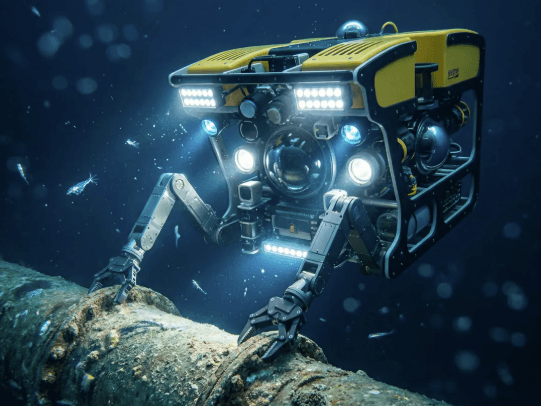
Remotely operated vehicles, or ROVs, represent the most established technology in the sector. After decades of refinement, the leading ROV systems offer reliable performance across a wide range of inspection, maintenance, and intervention tasks. Their operational limitations are well understood, which allows operators to plan deployments realistically. The support infrastructure — trained operators, maintenance services, spare parts availability — is mature and accessible in most major offshore regions.
Subsea pipeline inspection has similarly benefited from decades of iterative improvement. The combination of improved sensor technology, better vehicle control, and accumulated operational data has made pipeline inspection significantly more reliable and informative than it was even ten years ago. As the DNV framework for subsea integrity management has developed, it has provided operators with clearer standards for interpreting inspection data and making maintenance decisions based on it.
Cathodic protection systems for subsea structures have also demonstrated long-term reliability when properly designed and installed. This is a category where the engineering principles are well established, the performance is predictable, and the failure modes are understood. It is not a category that generates excitement, but it represents exactly the kind of dependable technology that keeps infrastructure operational over the long term.
• ROV systems with established maintenance and operator support networks have consistently delivered reliable inspection and intervention capability across commercial and offshore energy applications.
• Hydraulic control systems for subsea valves and actuators have matured to a point where performance in high-pressure, deep-water conditions is predictable and well-documented.
• Pipeline inspection technologies, particularly those combining multiple sensor modalities, now provide inspection data of sufficient quality to support long-term integrity management decisions.
• Cathodic protection engineering for subsea steel structures remains one of the most dependable tools available for managing corrosion over extended asset lifespans.
• Acoustic positioning and communication systems have improved considerably, offering more reliable performance in complex underwater acoustic environments than earlier generations of the technology.
How Operators Are Making Better Decisions in 2025
The operators who are managing subsea assets most effectively in 2025 tend to share a common approach. They are not chasing every new technology announcement. They are investing in capability that has been validated under conditions similar to their own operating environment, and they are demanding evidence of field performance rather than accepting laboratory results or pilot project data as sufficient proof of readiness.
There is also a growing recognition that the total cost of a subsea technology decision extends well beyond the initial procurement price. Maintenance access, spare parts availability, the availability of trained service personnel, and the cost of failure during operation all contribute to the real cost of a system over its operational life. Technologies that appear cost-competitive at the point of purchase can become significantly more expensive when these factors are accounted for honestly.
Risk assessment processes have also become more rigorous. Rather than treating subsea deployments as opportunities to test emerging technology, many operators are now reserving newer systems for lower-stakes applications and maintaining proven technology for critical functions. This is a rational response to the reliability gap that has become apparent in several high-profile deployments of immature technology in demanding conditions.
Conclusion
The honest picture of subsea technology in 2025 is that the field contains both genuine capability and genuine overselling, often within the same product category. The technologies that work reliably do so because they have been refined through sustained exposure to real operating conditions, supported by service infrastructure, and evaluated against clear performance standards. The technologies that have disappointed have generally been deployed before that refinement process was complete, often driven by commercial pressure rather than operational readiness.
For anyone making decisions about subsea equipment, systems, or service providers, the most useful question is not what a technology is capable of in ideal conditions, but how it has performed when conditions were not ideal. The answers to that question, gathered from operators with direct field experience rather than from vendor materials, provide the most reliable basis for decisions that carry real operational and financial consequences.
The sector will continue to develop. Some of the technologies that are overpromising today will eventually deliver on their potential. The task in the meantime is to distinguish between the two with clear eyes, and to build operational capability on foundations that have already been tested.