How to Choose the Right Conference Room Furniture for Columbia SC’s Growing Corporate Offices
Columbia, South Carolina has seen steady commercial development over the past several years. Government contractors, healthcare organizations, insurance firms, and university-adjacent businesses have expanded their physical footprints across the metro area. With that growth comes a practical challenge that often gets deferred until the last moment: equipping conference rooms in a way that actually supports how organizations work.
Choosing furniture for a conference room is not simply a matter of picking a table and chairs that fit the floor plan. The decisions made at this stage affect how meetings run, how clients perceive the organization, and how long the furniture holds up under daily use. Getting it wrong means disrupting workflow, absorbing replacement costs earlier than expected, or creating an environment that quietly undermines the professional impression an office is meant to project.
This guide is written for office managers, facilities coordinators, and operations leads who are either setting up a new space or reconsidering an existing one. The focus is on making informed, durable decisions rather than fast ones.
Understanding the Functional Requirements Before Selecting Anything
Before any furniture is ordered or any showroom is visited, the people responsible for the decision need to be clear on what the room will actually be used for. Conference rooms serve different functions depending on the organization, and furniture that works well for one type of use can perform poorly in another. A room used primarily for internal team reviews has different demands than one used for client-facing presentations or formal board meetings.
Organizations in Columbia looking at conference room furniture columbia sc should begin by mapping out their most common meeting formats. This includes the typical number of attendees, the frequency of reconfiguration, the technology requirements in the room, and whether the space doubles as a training area or breakout zone. Each of these variables changes what you need from the furniture itself.
Meeting Frequency and Furniture Durability
A conference room that hosts three or four meetings per week faces very different wear conditions than one that is booked nearly every hour of the business day. High-frequency use accelerates wear on chair upholstery, table surfaces, and base mechanisms. Organizations that underestimate this tend to replace furniture far sooner than anticipated, which doubles the cost over a five-year period.
Durability is not just about material quality in isolation. It is about how the materials hold up under the specific conditions of use. A chair with a high weight rating and premium foam can still deteriorate quickly if the upholstery is not rated for commercial use. Selecting commercial-grade furniture from the outset, rather than sourcing from residential or mixed-use retailers, is one of the more consequential decisions a buyer can make.
Room Configuration and Flexibility Needs
Some conference rooms need to stay fixed in layout because they serve a single consistent function. Others need to shift between formats depending on the day, accommodating a small leadership meeting in the morning and a departmental training session in the afternoon. These two scenarios require fundamentally different furniture strategies.
For rooms that need flexibility, modular table systems that can be reconfigured without tools are worth the additional upfront cost. Fixed pedestal tables, while often more stable and visually polished, make reconfiguration impractical. Understanding which scenario applies before purchasing prevents the common situation where a room is technically furnished but practically inflexible.
The Table Is the Functional Core of the Room
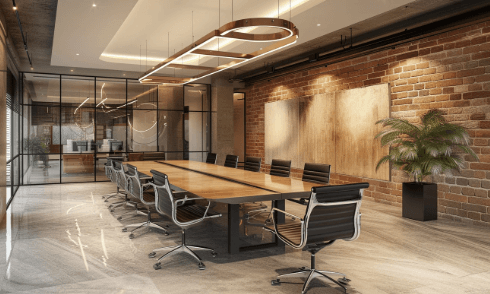
The conference table is not just the centerpiece of the room in a visual sense. It determines how many people can participate comfortably, how technology integrates into the meeting environment, and how the room reads to anyone who walks into it. A table that is too large for the room creates a crowded, difficult-to-navigate space. One that is too small for the intended headcount forces people to sit outside the natural meeting circle, which affects both participation and the perceived formality of the meeting.
Shape and Its Effect on Meeting Dynamics
Table shape has a practical effect on how meetings actually function. Rectangular tables create a clear orientation toward the head of the table, which works well in hierarchical settings where presentations or formal reviews are the norm. Round and oval tables distribute visual weight more evenly across participants, which tends to produce more open discussion. Boat-shaped tables, which are wider at the center, allow more participants to maintain sightlines to one another even in longer configurations.
The shape decision should follow the meeting format, not the other way around. Buying a rectangular table because it is the most common format, without considering whether that shape supports the actual communication style of the organization, is a common and avoidable mistake.
Surface Material and Long-Term Maintenance
Table surfaces in busy conference rooms are subject to consistent contact with laptops, notebooks, coffee cups, and hands. Laminate surfaces are durable and easy to clean but can show edge wear over time and may not project the right professional impression in client-facing rooms. Veneer surfaces offer a more refined appearance but require more careful maintenance. High-pressure laminate with edge banding offers a middle ground that holds up well in most commercial environments.
The surface finish also affects glare under conference room lighting, which matters when rooms include presentation screens. A matte or satin finish typically performs better in lit environments than a high-gloss surface, which can create reflective interference that distracts participants during presentations.
Seating Standards That Hold Up in Practice
Conference chairs often receive less attention than the table during the selection process, but they account for a large share of the room’s comfort and overall impression. Meetings that run long — and in many Columbia organizations, they do — place real demands on chairs. Poor lumbar support or inadequate seat depth causes discomfort that affects focus and performance, particularly in meetings that exceed an hour.
Ergonomics in a Meeting Context
The ergonomic requirements for a conference chair differ from those of a task chair used at a workstation. Conference participants do not remain in one position for the same duration or with the same consistency as someone working at a desk throughout the day. That said, chairs that offer no adjustability at all cause discomfort in mixed-height groups. A chair with a height-adjustable seat, a supportive back, and a stable base covers the functional requirements for most conference environments without overcomplicating the selection.
According to guidance published by the Occupational Safety and Health Administration, sustained seated postures that lack back support contribute to musculoskeletal strain over time. This applies in conference settings just as it does at workstations, particularly for organizations that run extended meetings or all-day sessions.
See also: Maximizing Business Success Through Digital Marketing
Aesthetic Consistency with the Broader Office Environment
Conference room seating should not be selected in isolation from the rest of the office environment. A chair that looks out of place relative to the office aesthetic creates a visual inconsistency that clients and visitors notice, even if they cannot articulate exactly why the room feels mismatched. This is especially relevant in Columbia’s professional services sector, where client meetings are a normal part of operations and the office environment carries meaning about how the organization presents itself.
Consistency does not mean uniformity. It means that the materials, tones, and proportions of the conference room furniture read as intentional rather than assembled from different purchasing decisions made at different times.
Technology Integration and How It Affects Furniture Decisions
Modern conference rooms rely on technology for presentations, video calls, and collaborative work. Furniture that does not account for this creates a room where technology becomes an afterthought — with cords running across the table, power strips placed on the floor, and screens positioned awkwardly relative to where participants sit.
Power and Connectivity in the Table Design
Tables that include integrated power modules or data ports eliminate the visual and physical clutter that comes from improvised setups. These features should be specified at the time of purchase because retrofitting them into an existing table is rarely clean or cost-effective. For organizations that rely heavily on laptop use during meetings or remote participation through video conferencing, built-in connectivity is a practical necessity rather than a premium feature.
Screen Placement and Sightlines
The placement of display screens affects where participants need to be positioned at the table to have an adequate view. A table that is too long for the room’s screen placement will result in participants at one end having poor sightlines. This is a room planning issue as much as a furniture issue, but it is worth addressing during the furniture selection phase rather than after installation, when changing the configuration becomes disruptive and expensive.
Working with Local Suppliers in the Columbia Market
Sourcing conference room furniture columbia sc from local or regionally available suppliers offers practical advantages that national e-commerce platforms cannot match. Lead times for local suppliers are typically shorter, which matters when a room needs to be operational by a specific date. Local vendors can also provide on-site measurement, layout planning, and installation — services that reduce the risk of receiving furniture that does not fit the space as expected.
Local suppliers familiar with the Columbia market also tend to understand the specific mix of commercial environments in the area, from the state government office corridor to the growing technology and professional services sector near the University of South Carolina. That familiarity often translates into more relevant product recommendations and faster problem resolution when issues arise after delivery.
For organizations managing multiple office locations or planning phased expansions, establishing a relationship with a local supplier who can support ongoing needs is more valuable than optimizing any single purchase for price.
Conclusion: Treating Conference Room Furniture as an Operational Decision
Conference room furniture in Columbia’s corporate market deserves the same level of deliberate attention as any other facilities investment. The choices made here affect how people work, how meetings function, and how the organization represents itself to clients and partners over a period of years.
The right approach begins with understanding how the room will actually be used, not how it might ideally be used in theory. It continues with selecting materials and configurations that hold up under real conditions. It concludes with sourcing from suppliers who can support the full process — from measurement to installation to long-term availability.
Organizations that approach this process systematically avoid the common cycle of premature replacement and piecemeal upgrades. Those that treat it as a secondary procurement decision often spend more over time while living with a room that never quite functions as it should. In a city where corporate infrastructure is expanding steadily, getting the conference room right from the start is a straightforward investment in operational consistency.