Polygraph Test: What It Really Measures (and What It Doesn’t)
The idea is simple, almost cinematic. You sit in a chair, wires attached, a calm voice asks questions, and a machine supposedly tells the truth. Pass or fail. Honest or lying. Clean or guilty.
That’s the myth, anyway.
The reality of a polygraph test is messier, more human, and far less definitive than most people expect. It doesn’t actually detect lies. It detects reactions. And that difference matters more than most realize.
Let’s unpack what’s really going on behind the machine.
The machine isn’t reading your mind
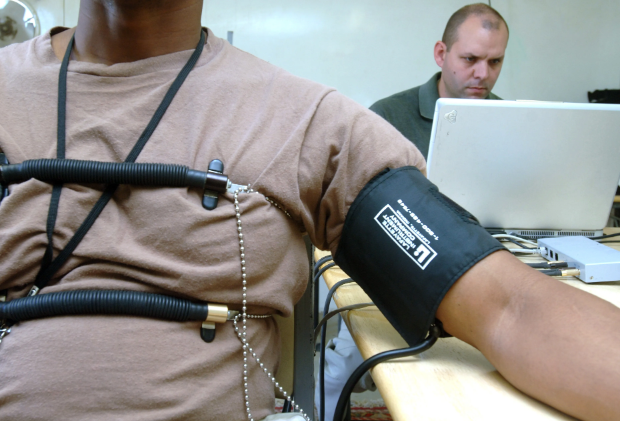
A polygraph measures physical responses. Heart rate. Blood pressure. Breathing patterns. Skin conductivity. Basically, it’s tracking how your body reacts when you’re asked certain questions.
Here’s the assumption: when someone lies, they feel stress or anxiety, and that shows up in those signals.
Sounds reasonable. But here’s the catch—those same reactions can come from a dozen other things.
Nervousness. Fear of being misunderstood. Embarrassment. Even just sitting in a high-stakes situation.
Picture this: someone is completely innocent, but they’re terrified of failing the test. Their heart starts racing. Their breathing gets uneven. The machine picks it up. Suddenly, their “truthful” answer looks suspicious.
Now flip it. Someone who’s practiced staying calm—or just doesn’t feel much anxiety—might show very little reaction, even when lying.
The machine doesn’t know the difference. It just sees signals.
Why people still believe in it
Despite its limitations, the polygraph has a strong grip on public imagination. Movies, TV shows, and crime dramas have done a lot of heavy lifting here. The polygraph is often portrayed as a near-perfect truth detector.
Let’s be honest—there’s something comforting about that idea. A device that cuts through deception and reveals the truth. No gray areas. No guesswork.
In real life, though, professionals who use polygraphs often treat them more as a tool than a verdict. It’s part of a process, not the final word.
In some cases, the test is less about the results and more about the psychological pressure it creates. People who believe the machine will expose them might confess before or during the test.
That’s not the machine detecting a lie. That’s human psychology doing the work.
What the test actually looks like
If you’ve never taken one, it’s not as dramatic as TV makes it seem.
It usually starts with a pre-test interview. This part matters more than most people expect. The examiner goes over the questions in advance, explains the process, and tries to establish a baseline for your responses.
Then comes the actual test. You’ll be asked a mix of questions—some relevant, some neutral, and some designed to provoke a response.
For example:
“Is your name Alex?” (neutral)
“Have you ever lied to someone who trusted you?” (control question)
“Did you take the missing money?” (relevant question)
The idea is to compare your physiological responses across different types of questions.
But here’s where things get subjective. The interpretation of those responses isn’t purely mechanical. A human examiner analyzes the patterns and makes a judgment call.
And like any judgment call, it can vary.
Accuracy isn’t as solid as people think
Ask ten people how accurate polygraphs are, and you’ll hear wildly different answers.
Some claim accuracy rates above 90%. Others say it’s barely better than chance.
The truth sits somewhere in between, depending on how the test is conducted, who’s interpreting it, and what standards are being used.
Scientific communities have debated this for decades. Many experts argue that polygraph results are too unreliable to be used as solid evidence in court—and in many places, they aren’t admissible for exactly that reason.
Think about that. A tool often seen as a “truth machine” isn’t trusted enough for legal proof.
That should tell you something.
The role of anxiety (and why it complicates everything)
Now here’s where it gets interesting.
Polygraphs don’t detect lies—they detect arousal. And anxiety is a huge part of that.
Some people are naturally more anxious than others. Put them in a high-pressure environment, hook them up to a machine, and ask serious questions… of course their body reacts.
Even small things can throw off results. Lack of sleep. Too much caffeine. A bad day. Worrying about how you’re being perceived.
There’s also something called “false positives,” where truthful people are flagged as deceptive. This is one of the biggest criticisms of polygraph testing.
Imagine being completely honest—and still failing.
That’s not just a technical issue. It can have real consequences in job screenings, investigations, and personal situations.
Can people beat a polygraph?
Short answer: sometimes, yes.
Longer answer: it’s not as simple as people think, but it’s also not impossible.
Because the test relies on relative responses, some individuals try to manipulate their reactions. For example, they might intentionally create stress during control questions—by tensing muscles or altering breathing—so that relevant questions don’t stand out as much.
Others focus on staying extremely calm throughout.
There’s debate about how effective these techniques are, but the fact that they’re even part of the conversation highlights a key issue: the system can be influenced.
And if a test can be influenced, it’s not a pure measure of truth.
Where polygraphs are actually used
You’ll still find polygraph tests in certain settings.
Law enforcement agencies sometimes use them during investigations. Not as definitive proof, but as a way to guide questioning.
They’re also used in some pre-employment screenings, particularly for government or security-related roles.
And then there are more niche uses—relationship disputes, private investigations, even reality TV.
Yes, really.
But here’s the pattern: the polygraph is rarely the final decision-maker. It’s one piece of a bigger puzzle.
See also: How Fintech Innovation Is Reshaping Global Payments and Banking in 2026
The human factor matters more than the machine
One thing people often overlook is the role of the examiner.
A skilled examiner isn’t just watching a machine. They’re observing behavior, listening to tone, and evaluating consistency. The conversation itself can reveal more than the data.
In some cases, the test becomes a structured interview with physiological feedback layered on top.
That means two different examiners might interpret the same data differently. Not wildly differently, but enough to matter.
So while the machine looks objective, the process around it isn’t entirely.
A quick reality check
If you’re ever asked to take a polygraph test, it’s worth understanding what it can and can’t do.
It can:
Pick up physical signs of stress
Highlight inconsistencies in responses
Create psychological pressure
It can’t:
Read your thoughts
Know your intentions
Guarantee truth or deception
That distinction is everything.
Why the myth persists
The polygraph sits at an interesting intersection of science, psychology, and storytelling.
It feels scientific. It looks authoritative. It produces charts and data. All of that gives it an aura of credibility.
But underneath, it’s still interpreting human emotion—and human emotion is complicated.
We’re not machines. We don’t respond in neat, predictable ways.
That gap between expectation and reality is where most misunderstandings come from.
So, is it useful or not?
Here’s the honest answer: it depends on how it’s used.
As a standalone “truth detector”? Not reliable enough.
As a tool to support an investigation or conversation? It can have value.
Think of it less like a lie detector and more like a stress detector with context. It doesn’t give answers. It gives signals.
And signals need interpretation.
Final thoughts
The polygraph test has a certain mystique. It promises clarity in situations where truth feels slippery.
But the truth about the polygraph is simpler—and less satisfying.
It doesn’t uncover lies. It measures reactions. And those reactions don’t always mean what we think they do.
So if you ever see someone hooked up to one of those machines, remember: what’s being recorded isn’t truth or deception. It’s the human body under pressure.
And that’s a very different story.