How a Warehouse Racking System Improves Storage Efficiency
Warehouses today are expected to handle more inventory, faster turnaround times, and tighter delivery schedules than ever before. As operations grow, storage quickly becomes one of the biggest challenges, especially when products start stacking in aisles or taking up valuable floor space. That is why a well-planned warehouse racking system is not just a useful upgrade; it is a strategic investment in efficiency and control. When storage is organized correctly, teams can move faster, reduce errors, and maintain a cleaner workflow across every zone of the facility. The right racking layout helps warehouse managers stay productive without constantly fighting clutter and inventory confusion.
Why warehouse efficiency depends on smart storage design
Storage efficiency is not only about fitting more products into a building. It is about creating a flow that allows teams to pick, restock, and track inventory without delays. When storage is poorly organized, time is lost searching for items, forklifts struggle with tight lanes, and inventory mistakes become more common. Over time, these issues can impact order accuracy, labor costs, and customer satisfaction.
A structured racking layout supports efficiency by turning open floor space into planned storage capacity. It creates designated locations for products, improves visibility, and helps staff move through the warehouse with clear direction. That means less wasted motion, fewer misplaced items, and a stronger ability to scale operations without constant disruption.
Key ways racking systems improve space utilization
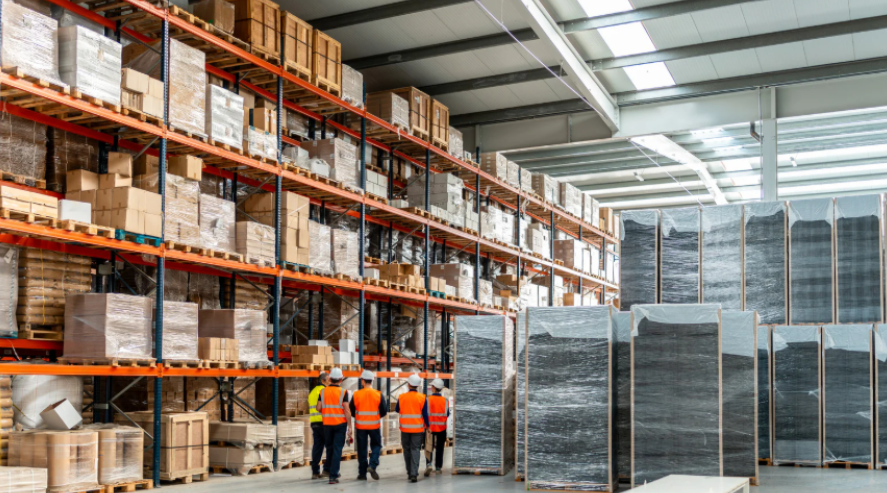
One of the biggest advantages of warehouse racking is vertical storage. Instead of relying only on floor space, racking systems allow warehouses to use height to increase capacity. This is especially valuable for operations where expansion is not immediately possible or where rent and facility costs are rising.
Racking systems can also be customized to support different product types. Pallet racks support heavier bulk storage, while shelving systems work well for smaller items. When the right system is matched to the inventory, the warehouse can store more efficiently without creating safety risks or access problems.
Improving inventory control and reducing errors
Efficient storage also leads to better inventory accuracy. When items are assigned to specific rack locations, tracking becomes easier, and misplacements are reduced. This helps warehouse teams maintain cleaner records and improve the reliability of stock counts.
When inventory is organized, order fulfillment becomes faster because staff can locate products without confusion. It also supports better cycle counting and reduces the pressure that comes with large inventory audits. Over time, organized racking systems become a foundation for better warehouse management and improved service consistency.
See also: Optimizing Workforce Management for Modern Businesses
Safety and long-term reliability depend on proper installation
Racking systems are not only designed for storage, but they are also designed for safety. Proper installation ensures that racks can handle the intended load weight and withstand the daily movement of equipment. A professionally planned layout also reduces the risk of collapse, product damage, and workplace injuries.
Warehouse leaders often improve safety by understanding common mistakes and avoiding poor usage habits. Understanding what not to do with the warehouse racking system helps prevent safety risks, avoid costly product damage, and maintain smooth warehouse operations by ensuring the system stays stable, compliant, and efficient over time. Maintenance, inspections, and correct loading practices help protect both employees and inventory.
Conclusion
Warehouse efficiency depends heavily on how well storage is planned, organized, and maintained. A strong racking system improves space utilization, supports smoother movement, strengthens inventory control, and reduces the daily delays caused by disorganized storage. When racking is designed correctly and supported through professional installation and safe practices, it becomes a long-term solution that helps warehouses operate faster, cleaner, and with greater consistency. For facilities focused on growth and productivity, structured racking is one of the most effective ways to improve performance and protect operational flow.